


News
Ward hat-trick boosts Wales

-

- National anthem: Wales line up before the game
-

- Pembrokeshire’s Angharad James: Rises highest to win the ball
-

- Melissa Fletcher: Fails to get her header on target
-

- Rhiannon Roberts: Goes forward with the ball
Wales women 4 Kazakhstan women 0
A HAT-TRICK from second half substitute Helen Ward gave Wales a crucial victory in their Euro 2017 qualifying game at a capacity Conygar Bridge Meadow on Thursday (26 Nov).
Wales women welcomed their counterparts from Kazakhstan, knowing that only a win would do if they were to maintain hope of qualifying for the Euro 2017 finals in the Netherlands.
Ahead of kick off Wales were adrift at the bottom of the table, one point behind the visitors, having lost their opening two fixtures, away at Austria (3-0) and Norway (4-0). With their next game a difficult trip away to Israel, it really was a must win game at the Conygar Bridge Meadow Stadium.
Star striker, Manchester City’s Natasha Harding had stated as much before kick off saying, ‘”We can’t think of anything else. We can’t think to draw or lose.” Kazakhstan too had lost to both Norway and Austria, although their defeats came at home, whilst they had picked up a solitary point in a goalless draw at the Lod Municipal in Israel in October.
3 Pembrokeshire players were included in the matchday squad, with Angharad James (Bristol WFC) starting at right back, and goalkeeper Joanne Price (unattached) among the substitutes with Nadia Lawrence (also Bristol WFC).

The game didn’t get off to the greatest starts when the Welsh anthem was played twice, before it was announced that the Kazakhstan anthem was unavailable, leaving the visiting players to sing ‘acappella’, much to the dismay of manager Kaloyan Petkov.
As play got underway, Wales started the first half on the front foot, enjoying a great deal of possession in wide areas, and it was from out on the right hand side that the first opportunity was created, as a good cross from Helen Bleazard found the head of Nia Jones, who was ruled to be offside when she headed home from 8 yards.
Jones was proving a handful up front, and when she was slipped through on goal with just 15 minutes gone, the capacity crowd thought she had scored, but she struck her effort just wide of the far post.
The rest of the half passed without any chances of great note for Wales, although Fishlock will have been disappointed not to hit the target when the ball dropped to her 18 yards out.

On the other hand, Kazakhstan, despite being under pressure for the majority of the first half, will feel they should’ve gone in with the lead as a defence mix up led to a glorious chance for Saule Karibayeva, but with the goal empty, as goalkeeper Alice Evans was left stranded on the edge of the box, her chipped effort was headed off the line by the scrambling Natasha Harding.
With Wales having faded before half time, coach Jayne Ludlow will have been keen for her side to emerge for the second half with a renewed attacking vigour, and this they did, taking the lead within five minutes of the restart.
With the visitors failing to clear a corner, a bout of head tennis ensued, and after Rhiannon Roberts had nodded the ball across the goalmouth, Natasha Harding reacted quickest, nodding home from a yard.

This settled Wales down, and playing with confidence, the stage was set for substitute centre forward Helen Ward to shine as she collected a sensational second half hat trick.
Her first came just after the hour mark, as Fishlock played a beautiful ball with the outside of her right foot into her path, and she strode forward confidently to smash the ball past the on-rushing Oksana Zheleznyak in the Kazakhstan goal to spark wild scenes of celebration, and perhaps relief on the Welsh bench.
Two minutes later and the same two players combined to produce an identical result, as this time Ward raced clear through the left centre back’s channel, finishing smartly with a cool left footed pass under Zheleznyak, giving Wales a comfortable 3-0 lead.
As a dejected Kazakhstan faded, Wales kept possession with ease, creating several further opportunities to extend their lead. As it was, it was the in-form Ward who pounced again to give Wales a well-deserved 4-0 victory and complete her hat trick in the dying moments of the game. Good work from Bleazard and Fishlock had sent her through, and she stretched out her right leg to toe the ball into the far corner.
It was a fantastic victory for Ludlow’s side, which owed much to a magnificent second half salvo, which blew the visitors away. The side move on to play Israel in December with renewed confidence in their quest to reach Euro 2017.
Team:
12 Alice Evans, 3 Nia Jones, 4 Sophie Ingle ©, 5 Rhiannon Roberts, 7 Angharad James, 8 Melissa Fletcher, 9 Natasha Harding, 10 Jessica Fishlock, 11 Rachel Rowe, 13 Helen Bleazard, 16 Amelia Ritchie.
Substitutes:
1 Joanne Price, 2 Chloe Chivers, 17 Charlotte Estcourt, 18 Helen Ward, 19 Kayleigh Green, 20 Alys Hinchliffe, 23 Nadia Lawrence.


PRIME MINISTER Keir Starmer is walking an increasingly delicate diplomatic tightrope as tensions in the Middle East threaten to spill into a broader international conflict.
Speaking at a press conference on Monday (Mar 16), Starmer repeatedly declined to be drawn into speculation about military escalation, stressing that any potential effort to reopen the strategic Strait of Hormuz would not be a NATO operation but rather “an alliance of partners”.
The narrow waterway between Iran and Oman is one of the most important shipping routes in the world, with around a fifth of global oil supplies passing through it.
Recent tensions in the region have raised fears that disruption there could trigger a major international crisis.
But Starmer’s message was clear: Britain will support efforts to keep trade routes open while avoiding being pulled into a full-scale conflict.
When asked directly about comments made by former US President Donald Trump suggesting NATO allies should help reopen the strait, Starmer refused to engage in the escalating rhetoric.
Instead, he emphasised diplomacy and cooperation.
“It’s not straightforward,” the Prime Minister said, adding that discussions with international partners were ongoing.
Observers noted that Starmer also avoided responding to speculation about potential military commitments, a move widely interpreted as an attempt to prevent Britain being boxed into a position before negotiations with allies are complete.

Relations with Washington
Starmer was also pressed by journalists about his relationship with Donald Trump, who has been increasingly critical of some NATO allies.
Asked to rate their relationship on a scale of one to ten, the Prime Minister said simply that it was “a good relationship”.
“We’re strong allies and have been for decades,” he said, adding that his responsibility was always to act “in the best interests of Britain”.

Despite the diplomatic language, the exchange underlined the growing pressure facing the UK government as global tensions rise.
The United States has been urging partners to support efforts to secure key shipping routes, while some European leaders remain cautious about the risks of escalation.
Energy and economic stakes
The stakes are not purely military.
Any disruption to shipping through the Strait of Hormuz could have immediate consequences for global energy markets, pushing up fuel costs and inflation.
That prospect is already weighing heavily on governments across Europe.
At the same press conference, Starmer announced new financial support for households struggling with rising heating costs and outlined plans to strengthen regulation of the heating oil market.
The move was widely seen as preparation for potential energy price shocks linked to instability in the Middle East.
A careful balancing act
For Starmer, the challenge now is balancing Britain’s commitments to international allies with a public that remains wary of overseas military entanglements after conflicts in Iraq and Afghanistan.
So far, the Prime Minister appears determined to keep the UK involved diplomatically while resisting pressure to escalate militarily.
Whether that position can hold if tensions in the region worsen remains the key question facing Downing Street.
For now, Starmer’s strategy is clear: support allies, protect global trade routes — but avoid sliding into a wider war.

THE FIRST phase of a major redevelopment programme at Portfield School in Haverfordwest has been completed, marking a significant step forward in specialist education provision in Pembrokeshire.
The project has been jointly funded by the Welsh Government and Pembrokeshire County Council through the Sustainable Communities for Learning programme, which aims to deliver modern, high-quality learning environments for pupils across Wales.
Developed in partnership with construction firm Morgan Sindall, the scheme has focused on accessibility, sustainability and the creation of spaces tailored to a wide range of learning and therapeutic needs.
Portfield School supports children and young people aged three to nineteen with additional learning needs. The new facilities provide modern, flexible and inclusive spaces designed to support pupils’ development while helping meet growing demand for specialist education provision in the county.

Headteacher Sarah Hartley said the new accommodation represented an important step forward for the school community.
She said: “We are delighted with the new provision for our pupils at Portfield School. It represents a significant step forward in ensuring every pupil has access to an inclusive, supportive and inspiring learning environment where they can thrive.
“As Headteacher I am incredibly proud of how well the pupils have transitioned into the new site and adapted so quickly to their new learning environment. I am very excited to be working alongside a dedicated team of staff who share the same passion for inclusive education. Together we will build a school community where every young person can flourish.”
The new building includes specialist facilities such as sensory rooms and improved outdoor areas designed to promote physical activity, social interaction and emotional wellbeing.
Cabinet Secretary for Education Lynne Neagle said the development would help support learners with additional needs across Pembrokeshire.

She said: “All learners deserve environments that nurture, challenge and support them. I am pleased to support learners with additional learning needs in Pembrokeshire through our Sustainable Communities for Learning programme. The specialist spaces will help us meet a wide range of needs and ensure every learner feels valued and able to thrive.”
Leader of Pembrokeshire County Council, Cllr Jon Harvey, described the completion of the first phase as an important moment for the school and the wider community.
He said: “This is an exciting moment for the school, the families we support, and the wider community. The new facilities will provide pupils with the high-quality, nurturing environment they deserve, and the first phase brings us closer to delivering the full vision for this exceptional school.”

Robert Williams, Area Director for Morgan Sindall Construction in Wales, said the company was proud to help deliver the project.
He said: “It’s a real privilege to hand over the new Portfield School SEN facilities. This milestone reflects the hard work and commitment of our Morgan Sindall team, and it has been fantastic to work with Pembrokeshire County Council to bring the project to life.
“The new facilities will make a lasting difference, providing children with a high-quality learning environment that offers the support pupils need to thrive and be inspired.”
Work on the next stage of the redevelopment has already begun. This will include refurbishment of the former Tasker Milward H Block for post-16 pupils, demolition of the existing primary school building, reinstatement works, the construction of a new respite care unit, and refurbishment of Holly House.
The overall scheme represents a long-term investment in specialist education and aims to ensure that children with additional learning needs across Pembrokeshire have access to the support and facilities they require.
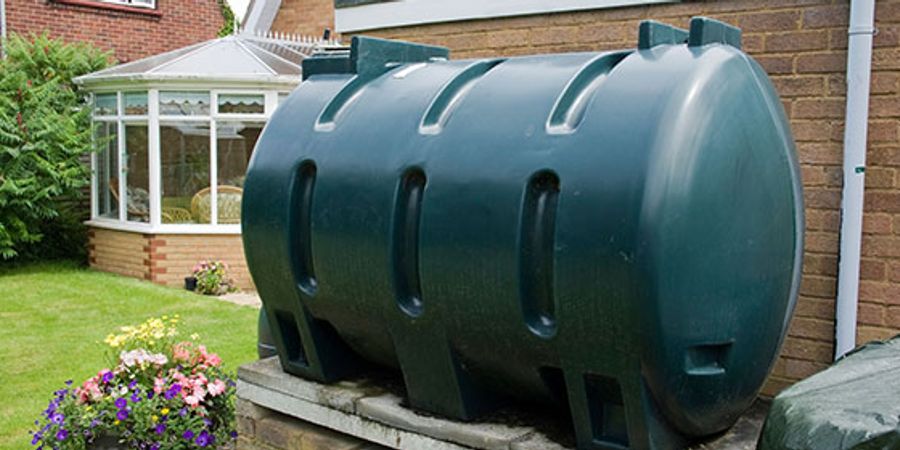
LOW-INCOME households across Wales are set to benefit from £3.8 million in support as part of a UK Government package aimed at helping families struggling with rising heating oil prices.
The funding forms part of a £50 million UK-wide support scheme announced by Chancellor Rachel Reeves, targeting rural households that rely on heating oil to warm their homes.
Heating oil prices have surged in recent months, with the cost of kerosene — the fuel used in most domestic oil tanks — rising sharply due to instability in the Middle East. Government figures indicate the price of kerosene has been particularly volatile and has increased faster than many other fuels.
Unlike gas and electricity customers, households using heating oil are not protected by Ofgem’s energy price cap, leaving them more exposed to sudden price increases.
Many families must also pay large upfront sums to refill their oil tanks, creating additional financial pressure during periods of rising costs.
The UK Government said the new funding is designed to support low-income households in rural areas, where alternatives such as mains gas are often unavailable.
Funding allocations were calculated using census data to identify areas with the greatest reliance on heating oil. In Wales, the £3.8 million allocation will be distributed by the Welsh Government, with the expectation that it will be used to support vulnerable households.
Chancellor Rachel Reeves said: “I know that for families in rural communities the sharp rise in heating oil prices is a real and urgent problem.
“That’s why we’re providing more than £50 million of targeted support to help the people who need it most.”
Secretary of State for Wales Jo Stevens added: “Wales has a high number of households who rely on heating oil and are feeling the pressure of rising bills.
“I know how worrying that is for families, which is why we are working with the Welsh Government to provide an extra £3.8 million to support the people who need it most.”
Energy Secretary Ed Miliband said the government was determined to tackle cost-of-living pressures.

He said:
“This government is committed to fighting people’s corner in tackling cost-of-living pressures. With this investment, alongside new measures to protect customers against unfair practices, we are standing up for the British people.”
Alongside the financial support package, ministers have announced plans to strengthen consumer protections in the heating oil market, which is currently not regulated by Ofgem.
Proposed measures include improvements to price transparency, dispute resolution, and support for vulnerable customers, as well as the creation of a Priority Customers Register to ensure those most in need receive help during supply disruptions.
The government is also considering introducing a dedicated regulator or ombudsman for the heating oil sector and has asked the Competition and Markets Authority (CMA) to closely monitor pricing in the market.
The CMA is already examining reports of cancelled orders followed by higher quotes and price increases for automatic deliveries. It has announced plans to conduct a detailed investigation into the UK heating oil market.
Households facing immediate financial difficulties due to rising heating oil prices are being advised to contact their local authority to find out what support may be available.



Education12 minutes ago
New facilities open at Portfield School as redevelopment reaches key milestone
THE FIRST phase of a major redevelopment programme at Portfield School in Haverfordwest has been completed, marking a significant step...


News57 minutes ago
£377m spent saving blast furnaces months after Port Talbot closure
Government intervention keeps UK’s last primary steelmaking furnaces running THE UK GOVERNMENT spent £377 million to prevent the closure of...


Sport21 hours ago
France crowned Six Nations champions after extraordinary final-day drama
Ramos penalty in Paris seals title as Ireland fall just short and Wales end losing run FRANCE were crowned 2026...


News1 day ago
Fishguard linked to allegations in Many Tears Animal Rescue investigation
Claims about puppies arriving through Pembrokeshire port emerge as licensing probe continues FISHGUARD has been named in allegations linked to...


Local Government2 days ago
Investigation confirmed after inspectors visit Many Tears Animal Rescue
Licensing authority declines to comment as police confirm attendance at Carmarthenshire rescue centre AN INVESTIGATION is underway following a visit...


Business3 days ago
Work set to begin on £50m hydrogen plant in Milford Haven
A MAJOR new hydrogen production facility worth around £50 million is expected to begin construction in Milford Haven later this...


Education4 days ago
Manorbier school closure approved while insurance claim still unresolved
Council confirms negotiations with insurer ongoing following 2022 fire PEMBROKESHIRE COUNTY COUNCIL has confirmed that negotiations with its insurer over...


Crime5 days ago
‘Knife attack’ at Spittal property leaves man in hospital
POLICE have arrested a woman following what is being described as a ‘knife attack’ at a property in Spittal on...


Community5 days ago
Pembrokeshire to receive its first banking hub in Pembroke Dock
LINK, the UK’s Cash Access and ATM network, has today announced local people and businesses in Pembroke Dock will benefit from a new banking...


Health6 days ago
Future of Withybush Hospital petition sparks urgent call for Senedd debate
CALLS have been made for an urgent debate in the Senedd over the future of services at Withybush Hospital as...
-

 Health3 days ago
Welsh Ambulance Service to host bi-monthly Board meeting
-

 News2 days ago
Rayner and Lammy visit Wales to discuss justice and community safety
-

 Local Government5 days ago
Register now to vote in May’s Senedd election
-

 Crime7 days ago
Former Pembrokeshire Army officer stripped of MBE after fraud conviction
-

 Community7 days ago
Tenby still waiting as Wales hits 50 rural mobile mast upgrades
-

 Community7 days ago
Carmarthenshire woman celebrates 100th birthday surrounded by family
-

 News7 days ago
Hustings to focus on learning disability support ahead of Senedd election
-

 Crime6 days ago
E-bike rider who sped through pedestrian alley sentenced by court