


News
Car parking charges are ‘killing town centres’

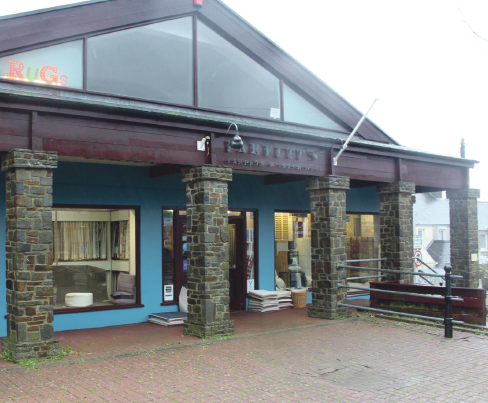

Parfitt’s Carpets and Interiors: Just one of the many businesses parking charges affect
THE PLIGHT of town centre businesses was discussed at Pembrokeshire County Council’s meeting on March 10.
Taking aim at the Council and attempting to persuade members to back a scheme to reduce car parking charges in Pembrokeshire’s town centres was Leader of the Pembrokeshire Alliance Bob Kilmister.
Cllr Kilmister’s motion was just the latest shot in a long-drawn out battle between those who wish to attract shoppers to towns and those who see parking as a cash cow to be milked for money to help balance the books.
That Pembrokeshire has had historic problems with its parking provision is almost trite, so often has the matter been the subject of reviews, reports and debate in the Chamber and on committee.
Critics say that implementation of car parking charges in popular car parks around the county has contributed in the effort of driving people away, causing an increase in congestion with people parking in neighbouring streets to avoid paying a price to walk around the town.

Some previously free car parks have emptied almost immediately after the imposition of charges, for example at St Thomas Green and Rifleman’s Field.
Despite a report prepared for the County Council which set out that parking charges and their increase would have an adverse effect on town centre trade and that the Council has steadfastly ignored it in order to raise revenue from workers and shoppers while ruining shops and businesses.
Undaunted, Bob Kilmister decided that it was time to make some real progress on the matter as opposed to doing what the Council seems most adept at doing; hanging around wringing its hands about town centre decline without doing a thing to encourage shoppers to return to them.
Pembrokeshire is in the virtually unique position in the UK of having car parks in the centre of the County Town, Haverfordwest, while free bus services – admittedly subsidised by retailers – ship shoppers to out of town retail parks.

During the meeting, it seemed that some – but by no means all – members of the local authority support Pembrokeshire’s town centres in the same way that rope supports the condemned prisoner.
Cllr Kilmister explained to full council how he felt that if Pembrokeshire County Council actually benefited directly from the collection of business rates (100%), the Council would deal with this issue “very very differently.”
He also commented on how he felt that when this matter was raised in cabinet, the notice of motion was interpreted incorrectly. This gave the impression that the councillors present at that time were only mildly interested.

This feeling was intensified, with many of the speakers at the meeting failing to even pronounce Cllr Kilmister’s surname during the course of the debate.
“The Council receives approximately 75% of business rates,” he said. “Empty retail premises don’t have a direct impact on this council’s revenue, but have a huge impact on the economy and employment. It may surprise people, but retail is the biggest employer in the UK by a considerable margin.”
Cllr Kilmster claimed that in 2014, 2.7 million people were employed through retail, with the next biggest sector being construction, and said that: “Since this inception of this authority we have done very little to support our town centres.”
When the charges were first introduced, Councillor Terry Mills went as far as to describe the parking charges in Milford Haven town centre as “criminal,” and that it was “the last thing our town needs.”
As it stands, Haverfordwest town centre is a monument to the ability of local planners to inflict more damage on its local community.
Cllr Kilmister stated that since the charges, car park revenue has “gone in leaps and bounds,” and said that between 2008 and 2009, the Council’s total car park revenue was £51,000. In comparison, next year’s budget proposes an increase in revenue to £584,000 – over 1,000% of an increase in less than ten years.
Mr Kilmister stated that is people believe that has no effect on the economy in Pembrokeshire, then he “truly despair.”
He said: “Take a walk down Bridge Street in Haverfordwest and see what a depressing experience it is. Unless we do something, it’s not going to change. Pots of paint will not bring customers.”
And, he’s right! While retail parks are packed, with barely a space at Withybush Retail Park or Havens Head, town centres are dying. Not only is Bridge Street in Haverfordwest suffering, but Dimon Street in Pembroke Dock and Charles Street in Milford Haven have, and are continuing to pay the price.
Councillor Rob Lewis decided to chip in, seemingly defended the charges currently imposed. He told the Council that his “colleagues from the glorious north” face charges that are three times higher than what the people of Pembrokeshire currently fork out.
Almost as if he was telling Cllr Kilmister that he’s got nothing to complain about, Cllr Lewis said: “Charges don’t just cover car parks – the money is used for traffic management. When we discussed this in July, we recognised this could have an impact.”
Next to address the Council was Councillor Peter Stock, who told the council that the town centres are in a “bad state” – except for Narberth. He claimed that there has got to be some answers and action should be done very quickly. However, he also stated: “I’m not saying free car parking is the answer.”
He went on to say: “I’m sad when I look to see how to town centre has deteriorated. Carmarthen can afford to have charges because there’s something to go there for, we’ve got to encourage people to come in, so we must give them an incentive.”
What do people think?
A petition, which gained almost 9,000 signatures by April 2015, asked the Council not to implement any charges for parking at St Thomas Green Car Park in Haverfordwest.
Despite this, a decision to impose the charges was made in July 2015, and in addition to this area, charges were also introduced in High Street in St Dogmaels, Station Hill in Goodwick, New Quay and Rifleman’s Field in Haverfordwest, Mart Ground in Crymych and Station Road in Pembroke.
As of February 1, you must pay to park at St Thomas Green. The other areas will carry charges with them by the end of March.
Residents at St Thomas Green expressed their upset, and explained that families with two cars would have to buy a permit, which would work out as being expensive – and even then – what’s to stop someone parking in their space illegally?
And, just in that small vicinity is a Doctors Surgery, Haverfordwest Swimming Pool and much more, including people’s homes. Does the Council really want to charge people for visiting a doctor?
Speaking of St Thomas Green, Cllr Stock said: “It’s sad to see the number of times it’s empty and lacking spaces.”
He continued: “If we grasp the nettle – and you do need to grasp the nettle – you must either consider the fact you want successful town centres or not.”
It looked as though Councillor Keith Lewis was about to sympathise with the public, by starting off stating: “I must accept if we were asked as individuals, we would vote for not paying to park.”
However, our hopes were diminished when he stated: “But that’s not the world we live in. There is no such thing as a free car park.”
He did admit, however, that during the time that the ticket machine was vandalised in a car park in Cardigan – so it was therefore out of use – retail increased.
Car parks in Cardigan currently charge £1.40 for an hour, which according to Cllr Lewis, is a ‘significant difference,’ stating the 30-50p charge is ‘perfectly reasonable.’
But, what Cllr Lewis failed to explain, was whether Cardigan’s town centre is thriving, or whether trade has reduced since the charges – an important piece of information, that would most likely, show the latter.
Councillor Mike Evans, who explained that the £584,000 proposed that will come in from car parking charges is profit, with an income of £1.5m, and suggested bringing in free car parking in Haverfordwest and Milford.
When it was time for Councillor Tessa Hodgson to speak, she spoke of how the ‘landscape of British retail is changing,’ and suggested a way of paying for car parking by means of electronics.
She proposed that the Council look at ‘smart technology,’ and said to a room of men how she thinks it a good idea to propose paying for parking through technology as opposed to ‘scrambling for change in your handbags.’
Bringing a personal experience to the table was Council Gwilym Price, who explained that the day before the car parking charges were introduced at West Street Car Park in Fishguard, the car park was full. The day after, he said, it was empty.
He explained: “Car parks should be packed. It’s causing a lot of confusion and a lot of upset.”
What do business owners think?
The Herald spoke to shop owners around Pembrokeshire, to ask whether they thought that car parking charges took a toll on the amount of customers they had coming into their stores. It seemed that the feeling was mutual between them all.
We asked Mr James Parfitt, owner of Parfitt’s Carpets & Interiors Ltd in Pembroke Dock, whether he agreed with Cllr Kilmister, and if he thought that car parking charges have an affect on the amount of people coming into town centres to shop.
Mr Parfitt told The Herald: “I completely agree. I’ve been telling the Council from day one! In the first three months of the car parking charges being introduced, our turnover had fallen by 40% – and that’s just my business.
“Car parking charges are killing our town centres. Paying to park just to have a look around the town is silly, especially when out of town stores are free of charge.
“It’s financially hard on people, and it’s non beneficial to town centres at all. It would be a huge benefit for town centres to have free charges, and if the Council want to regenerate them, Pembroke Dock needs its help.
“We need to encourage people to come into the town centre as much as possible.”
Mr Parfitt went on to explain what he think should be done with regards to parking. He said: “There should be free management parking. We still want the traffic wardens, because they do a good job. They make sure that people aren’t parked illegally, and we’ll need them to make sure we aren’t grid locked.
“There should be free parking for two hours, and someone can pay if they want to stay longer. It will still need to be policed, but it would be the right way forward.”
When asked if Mr Parfitt felt whether free parking would reduce the amount of people parking on curbs, neighbouring streets or on double yellow lines, he said: “Absolutely.”
What does Cllr Kilmister think?
The Herald also contacted Cllr Kilmister after the council meeting, to ask what his thoughts were regarding how the notice of motion was dealt with within the chamber.
Cllr Kilmister said: “I don’t think many of the Councillors actually read my notice of motion. I did not make any clear cut proposals, just suggested that the Council investigates the affect car parking charges were having on trade in our town centres, and suggested some ideas for innovative schemes to try and increase footfall in all our town centres.
“Councillors who rejected this notice of motion must be saying that they are happy with the trade levels in our towns. I am not, and I am sure our hard pressed retailers must be tearing their hair out at the lack of interest shown in their plight by those councillors, who voted against my motion.
“Time is running out for our town centres and the current administration does not understand how desperate things are.”
He continued: “Retailing is the biggest employer in the country, and yet I don’t think many councillors understand the affect car parking charges can have on footfall.
“They lack vision, ambition and seem only concerned with the revenue they are receiving from our car parks. This is short sighted and will further damage the retail economy in Pembrokeshire.”



Rayner, Healey and Miliband handed senior roles as Reeves, Lammy and Stevens leave government
PRIME MINISTER Andy Burnham has announced a further wave of Cabinet appointments, bringing Angela Rayner back into government and handing senior roles to Lucy Powell, Jonathan Reynolds and close political ally Anneliese Midgley.
The latest announcements confirm that Burnham is carrying out a significant restructuring of Sir Keir Starmer’s former administration rather than simply moving a handful of ministers between departments.
Rayner has returned as Secretary of State for Housing, Communities and Local Government, the position she left last year. The department will also oversee Burnham’s plans to transfer greater powers away from Westminster and into the nations, regions and local government.
Lucy Powell, Labour’s deputy leader, has been appointed Education Secretary, replacing Bridget Phillipson.
Phillipson will remain in government as Minister for Women and Equalities, although the move represents a substantial reduction in her responsibilities.
Jonathan Reynolds has returned to his former position as Business and Trade Secretary after serving as Chief Whip under Starmer.
His department is being expanded to take responsibility for science and innovation and will be renamed the Department for Business, Innovation, Science and Trade.
Anneliese Midgley, who played a central role in Burnham’s return to Parliament and leadership campaign, has been appointed Chief Whip.
The appointments follow the earlier confirmation that former Defence Secretary John Healey will become Chancellor.
Healey’s selection was considered a surprise after Ed Miliband and Shabana Mahmood had both been strongly linked to the Treasury. He replaces Rachel Reeves, who left the government after reportedly turning down another senior Cabinet role.
Miliband has instead been appointed Foreign Secretary, replacing Yvette Cooper, while Mahmood remains Home Secretary.
Cooper has moved to the Department of Health and Social Care, where she replaces James Murray. Burnham has made reform of adult social care one of the central missions of his government.

Pat McFadden will continue as Work and Pensions Secretary, providing one of the clearest elements of continuity with the previous administration.
Louise Haigh has been handed one of the most powerful positions in the new government. She becomes First Secretary of State, Chancellor of the Duchy of Lancaster and the senior Cabinet Office minister.
Although she has not formally been given the title of Deputy Prime Minister, the appointment makes Haigh Burnham’s principal coordinator across government and effectively his deputy at the Cabinet table.
Who has left?
The reshuffle has seen several figures closely associated with Starmer removed from government.
Rachel Reeves has departed as Chancellor, while David Lammy has left his positions as Deputy Prime Minister and Justice Secretary.
Darren Jones, who served as Chief Secretary to the Prime Minister, has also been removed, alongside former Housing Secretary Steve Reed and Business Secretary Peter Kyle.
Attorney General Lord Richard Hermer, Science and Technology Secretary Liz Kendall, Welsh Secretary Jo Stevens and Northern Ireland Secretary Hilary Benn have also confirmed their departures.
James Murray has been replaced as Health Secretary, although it remains unclear whether he will be offered another government position.
Wales still waiting
No replacement has yet been announced for Jo Stevens as Secretary of State for Wales.
The vacancy is particularly significant because Burnham has promised a major programme of constitutional change and greater devolution of powers from Westminster.
The identity of the new Welsh Secretary will provide an early indication of how prominently Wales will feature within the new Prime Minister’s plans.
Several further senior appointments remain outstanding, including the posts of Defence Secretary, Justice Secretary, Northern Ireland Secretary and Welsh Secretary.
Wes Streeting, Lisa Nandy, Heidi Alexander, Miatta Fahnbulleh, Angela Eagle and a number of other Labour figures have entered Downing Street, but their positions had not been formally confirmed at the time of publication.
Burnham took office on Monday after being formally appointed by the King, promising what he described as a “circuit breaker” moment for Britain.
His government is expected to announce its first package of cost-of-living measures on Tuesday, with proposals involving energy bills and bus fares among the policies being considered.

Magistrates said Edward Roxborough lost his temper during an unprovoked attack on a vulnerable youngster
A PEMBROKESHIRE man has been handed a suspended prison sentence after admitting assaulting a child in Narberth.
Edward Roxborough, aged 32, of Mynachlog-ddu, near Clunderwen, appeared before Swansea Magistrates’ Court for sentencing after pleading guilty to assault by beating.
The court heard that the offence took place last year and involved what magistrates described as an “unprovoked attack of a serious nature”.
Magistrates said Roxborough had reacted angrily and lost his temper against a defenceless and vulnerable child, who cried out in pain following the assault.
The offence was considered serious enough to cross the custody threshold.
Roxborough was sentenced to 18 weeks in prison, suspended for 18 months.
The court said the sentence had been suspended in light of recent legislative changes and the presumption in favour of suspending short custodial terms.
He was also ordered to complete 200 hours of unpaid work and up to 20 rehabilitation activity days.
Roxborough must pay £400 in prosecution costs and a victim surcharge of £154.
A collection order was made, with the full amount due by August 27.
No compensation order was imposed, with magistrates noting that compensation could be pursued through other channels.
The prosecution was conducted by Adam Burcher, while Chris Evans represented Roxborough.

Reporting restrictions were imposed under Section 45 of the Youth Justice and Criminal Evidence Act 1999, preventing the child from being identified.
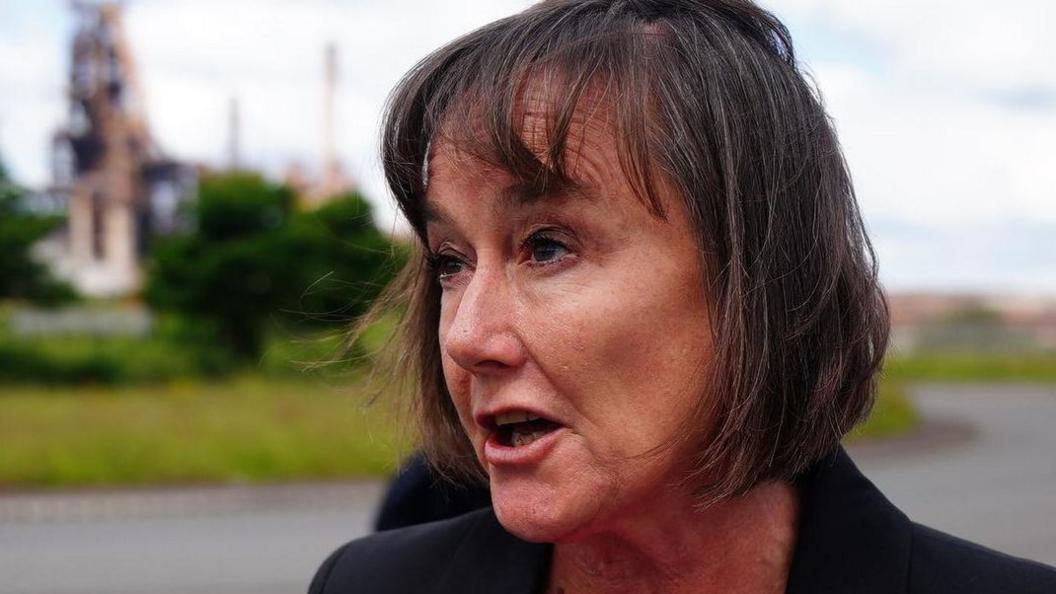
Cardiff East MP repeatedly visited Pembrokeshire to champion clean energy jobs, but her successor inherits unresolved questions over Milford Haven’s share of the Celtic Sea boom
JO STEVENS is out as Secretary of State for Wales after new Prime Minister Andy Burnham chose not to retain her in his first Cabinet.
The Cardiff East MP confirmed on Monday (Jul 20) that she would no longer serve as Welsh Secretary, bringing her two-year tenure at the Wales Office to an end.
Her departure has particular significance for Pembrokeshire, where she became one of the UK Government’s most prominent advocates for floating offshore wind, the Celtic Freeport and the transition from oil and gas towards cleaner forms of energy.
Ms Stevens made repeated visits to Milford Haven and Pembroke Dock, met apprentices and major employers and spoke directly to The Pembrokeshire Herald about the prospect of skilled jobs being created in West Wales.
Some tangible investment followed those visits. However, many of the biggest employment figures attached to the green energy transition remain forecasts rather than jobs already created.
Her successor will inherit the task of proving that Pembrokeshire will receive a substantial and lasting share of the promised economic benefits.
Departure despite backing Burnham
The decision is particularly notable because Ms Stevens publicly backed Mr Burnham during the Labour leadership contest.
She said in June that he had the experience, values and political reach required to become Prime Minister.
Her departure therefore appears to be part of Mr Burnham’s wider effort to create a new Cabinet and establish a clear break with the previous administration, rather than the result of hostility between the two politicians.
Ms Stevens is among a number of senior figures from Sir Keir Starmer’s government who have left Cabinet as Mr Burnham builds his new administration.
At the time of publication, her replacement as Secretary of State for Wales had not been announced.
Early visit to Milford Haven
Ms Stevens began building links with Pembrokeshire before Labour entered government.

As Shadow Welsh Secretary, she visited the Port of Milford Haven with Henry Tufnell in early 2024 to discuss the port’s operations, its development plans and the barriers facing further investment.
Following the visit, Labour identified ports including Milford Haven as potential beneficiaries of its proposed investment in floating offshore wind and domestic renewable-energy manufacturing.
The promise was significant for Pembrokeshire, which has lost thousands of well-paid industrial jobs following the closure of several major oil refineries.
Labour argued that investment in ports, offshore wind and associated manufacturing could create a new generation of skilled employment.
Pembroke Dock Marine opening
After Labour’s general election victory and her appointment as Welsh Secretary in July 2024, Ms Stevens returned to the county for the official opening of the £60 million Pembroke Dock Marine redevelopment.
She attended alongside then Deputy Prime Minister Angela Rayner and former First Minister Eluned Morgan.
The development included a new slipway, enlarged workboat pontoons, upgraded quayside facilities and infrastructure intended to support marine renewable-energy projects.
It was forecast that the wider development could support up to 1,800 jobs.
The project was funded and developed over several years through the Swansea Bay City Deal and other partners. It would therefore be misleading to describe it as an achievement delivered solely during Ms Stevens’ tenure.
However, she used its opening to reinforce the new UK Government’s commitment to Pembrokeshire’s energy sector and helped place the county prominently within Labour’s industrial message.
Ledwood and Dragon LNG visits
Ms Stevens returned in January 2025 to confirm Pembrokeshire’s inclusion in a clean-energy skills pilot.
During the visit, she met workers and apprentices at Ledwood Mechanical Engineering in Pembroke Dock and representatives from Dragon LNG.
The initiative was intended to help existing workers transfer their skills into sectors including offshore wind, hydrogen and other low-carbon industries.
Speaking to The Herald, Ms Stevens described the pilot as an important step towards creating the workforce required for clean-energy expansion in the Celtic Sea.
She later said she wanted more young people to be able to remain in West Wales and build careers in the emerging industries being attracted to the area.
Those visits gave the county political visibility and helped bring employers, training providers and government representatives together.
The longer-term test, however, is whether the training leads to substantial numbers of permanent jobs based in Pembrokeshire.
Investment beginning to arrive
There have been concrete developments during Ms Stevens’ time in office.
Ledwood Engineering was among the Pembrokeshire businesses selected to benefit from a £13 million offshore wind supply-chain funding programme backed by The Crown Estate.
Work has also progressed on a proposed £50 million hydrogen production facility at the former refinery site now operated as the Impala Terminal in Milford Haven.
The hydrogen scheme is expected to create around 60 jobs during construction and approximately ten permanent positions once operational.
Floating wind projects in the Celtic Sea have also moved forward through seabed leasing, government support and preparatory investment.
These developments show that the clean-energy programme is more than a political slogan.
Nevertheless, the number of permanent jobs confirmed so far remains considerably below the thousands repeatedly discussed in speeches and government announcements.
The Freeport question
Ms Stevens also strongly supported the Celtic Freeport, which links Milford Haven and Port Talbot.
The project was backed with £26 million of government funding and designed to attract investment through tax incentives, customs arrangements and simplified planning.
Ministers said the Freeport could help generate thousands of jobs and attract major private investment into South and West Wales.
However, The Herald has repeatedly raised questions about how those benefits will be divided between the two ports.
Port Talbot has secured up to £64 million to develop a specialist floating offshore wind hub and has been described as a cornerstone of the emerging industry.
Its proposed role in turbine assembly and large-scale port infrastructure has been set out in considerable detail.
Milford Haven’s role in operations, maintenance, engineering, fuel production and marine support remains important, but the eventual scale of the work and number of local jobs have been less clearly defined.
That does not mean Pembrokeshire has been excluded from the opportunity.
It does mean that the incoming Welsh Secretary must provide greater clarity about what work will be based locally, when it will begin and how many permanent jobs it will create.
Stevens defends her record
In announcing her departure, Ms Stevens said serving as Welsh Secretary had been a privilege and an honour.
She said her priorities had included attracting investment, creating jobs and giving Welsh communities greater control over their futures.
Ms Stevens highlighted what she described as the largest Welsh public-services settlement since devolution, support for the steel industry, investment in nuclear power at Wylfa and a long-term commitment to Welsh rail infrastructure.
She also pointed to local-growth funding and cooperation between the UK and Welsh governments.
Those are substantial claims and form an important part of any fair assessment of her tenure.
Critics will argue that several major commitments, particularly on rail funding and green employment, have yet to produce all the results promised.
Supporters will point out that large infrastructure and energy projects take years to develop and that many of the schemes promoted during her time in office are still at an early stage.
Pembrokeshire promises now pass to successor
Jo Stevens leaves the Wales Office having made Pembrokeshire a regular feature of the UK Government’s clean-energy narrative.
She visited the county, met local businesses and apprentices and repeatedly argued that West Wales should benefit from the transition towards floating wind, hydrogen and renewable energy.
Her record should not be dismissed simply because every promised job has not yet materialised.
Equally, announcements, visits and projected employment figures cannot be treated as completed delivery.
The fairest conclusion is that Ms Stevens helped advance Pembrokeshire’s case and supported several important projects, but leaves before the full economic outcome is known.
Her successor must now turn broad ambitions into named contracts, firm investment decisions and permanent, well-paid employment.
For Andy Burnham’s new government, the question is not only whether it will retain the promises made to Pembrokeshire.
It is whether local communities will finally see those promises translated into jobs.



News12 hours ago
Jo Stevens out as Welsh Secretary as Burnham reshapes government
Cardiff East MP repeatedly visited Pembrokeshire to champion clean energy jobs, but her successor inherits unresolved questions over Milford Haven’s...


Crime18 hours ago
Teen cleared of attempted murder but guilty of GBH after Milford teacher stabbed
Jury returns 11-1 majority verdict on charge of causing grievous bodily harm with intent, with sentencing set for September 3...


Community19 hours ago
French troops march through Fishguard as Britain’s last invasion returns to life
Battle scenes, cavalry displays and a surrender procession brought one of Pembrokeshire’s most extraordinary stories back to the streets MUSKET...


News19 hours ago
Andy Burnham promises new politics as he enters Downing Street
New Prime Minister admits politicians have “not been good enough” as he sets out a ten-year plan for Britain and...


Health2 days ago
Two new surgeons appointed as Hywel Dda admits orthopaedic waits remain too long
Health board says it is increasing capacity after figures revealed hip replacement patients waited an average of 64 weeks HYWEL...


Community3 days ago
84-year-old man rescued after falling overboard near Tenby
A MAYDAY call sparked a major nighttime rescue after an 84-year-old man fell from a tender and was swept towards...


Crime4 days ago
Jury hears final arguments in Milford Haven teacher stabbing trial
Defence says there was no motive or intention to kill as judge reviews competing accounts of classroom knife incident SPECIAL...


News4 days ago
Andy Burnham becomes Labour leader and prepares to enter No 10
Former Greater Manchester mayor promises an ‘unashamedly Labour’ government after completing extraordinary return to Westminster ANDY BURNHAM has been formally...


News4 days ago
Motorcyclist dies following collision near Narberth
Police appeal for witnesses and footage after fatal crash on B4313 at Redstone A MOTORCYCLIST has died following a collision...


Local Government5 days ago
Stepaside school saved as council abandons closure proposal
Governors welcome decision but maintain original plans were based on outdated information STEPASIDE Community Primary School will remain open after...
-

 Health19 hours ago
Welsh Ambulance Service invites public to AGM and Board meeting
-
News2 days ago
Andy Burnham set for No 10 as Wales awaits change
-
Crime18 hours ago
Teen cleared of attempted murder but guilty of GBH after Milford teacher stabbed
-

 Crime17 hours ago
What the Milford Haven School stabbing verdict really means
-
Health2 days ago
Two new surgeons appointed as Hywel Dda admits orthopaedic waits remain too long
-

 Community2 days ago
Tributes paid to long-serving Mansel Davies driver Gareth Griffiths
-

 Entertainment1 day ago
Dinosaur adventure set to roar into the Torch Theatre
-

 Farming1 day ago
Welsh farmers promised £1bn funding package under three-year deal
tomos
April 4, 2016 at 8:05 pm
the IPiG farmers who run the council don’t care about shops or town centres, they’ve destroyed PCC as a council and as a county so lets destroy the town centres too eh?
I’d have thought they would be so ashamed of what they’ve done but I guess all those expenses and SRAs keep them warm and sleeping soundly at night.
Paris
April 10, 2016 at 9:03 am
Of course we cannot forget about the litter and the hundreds of cigarette ends spread all over the place………..disgusting.
kathryn Hodgson
April 15, 2016 at 7:39 pm
As a busy shop owner, housewife and babysitter my aim is to get to the nearest car parking space to the shop that i’m buying from, rush in get what I need and rush out, I don’t need the aggro of finding change for parking metres, Also, speaking as a trader in Pembroke Dock , parking charges have been proven to be detrimental to local economy, there are surely other ways for PCC to make their money