


News
Police say ‘family informed’ after body found in woods

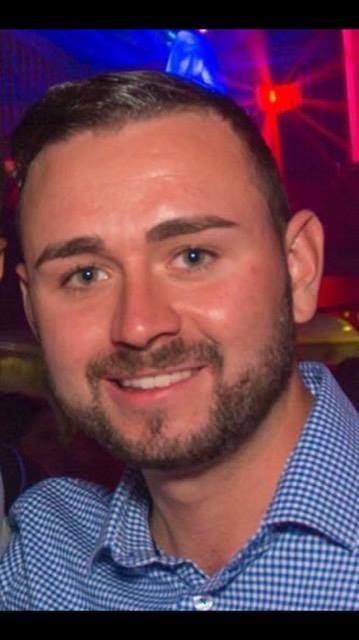

Went missing after night out: Adam Turner, 23
DYFED-POWYS POLICE have released an update to the search for Adam Turner, a 23-year-old from Pembroke Dock who was last seen leaving Circles night club in Milford Haven in the early hours of yesterday morning (Oct 16).
A police spokesperson said: “Dyfed-Powys Police searching for missing 23 year old Adam Turner, have found a body in a wooded area in Pembroke Dock, known locally as Ferry Woods.
“The body has not been formally identified at this time, but Mr Turner’s family have been informed of this development.
“Police officers assisted by specialist recovery teams from HM Coastguard and Ambulance service have recovered the male body.
“Further information will be released when appropriate.

“The family ask for their privacy to be respected at this extremely difficult time.”


Communities across north Pembrokeshire are preparing to welcome thousands of visitors for eight days of Welsh language, music, literature and culture
THERE are now just ten days to go until Eisteddfod y Garreg Las opens its gates for an eight-day celebration of the Welsh language, creativity and culture.
The National Eisteddfod will be held at Llantwd, in north Pembrokeshire, from Saturday, August 1, until Saturday, August 8.

Excitement is already building throughout the area, with communities decorating villages, roadsides and public spaces ahead of the festival’s arrival. Construction of the Maes, the main Eisteddfod site, is also gathering pace as organisers prepare the stages, pavilions, exhibition areas and other facilities needed for one of Wales’ largest cultural events.
Although the festival is being staged in Pembrokeshire, the official catchment area stretches beyond the county boundary and includes communities in south Ceredigion and west Carmarthenshire.
Months of community events, concerts, sponsored activities and fundraising drives have helped build momentum ahead of the Eisteddfod.
Local committees have raised more than £528,000, believed to be the largest amount ever collected by a local fund for a National Eisteddfod.
John Davies, chairman of the Garreg Las National Eisteddfod Executive Committee, described the fundraising campaign as historic.
He said: “More than £528,000 has been raised so far, the largest amount ever raised by a local fund for a National Eisteddfod.”
Volunteers who have supported the fundraising effort will be recognised during a special Celebrating Our Champions ceremony at 10:00am on the festival’s opening day. Representatives from local committees will be invited onto the stage to receive public recognition for their work.

Pembrokeshire on display
Pembrokeshire County Council and its partners will have their own dedicated area on the Maes, known as Pentre’r Garreg Las.
The area will celebrate the people, culture, communities and organisations of Pembrokeshire and the wider Eisteddfod region.
A full programme of discussions, performances, demonstrations and community activities will be held in Pabell Pawb throughout the week.

The programme is expected to feature local performers, community organisations, schools, businesses and projects, giving visitors an opportunity to discover more about the area and the people who live and work here.
Organisers hope the Eisteddfod will not only provide a major economic and cultural boost during festival week, but will also leave a lasting legacy by encouraging greater use of the Welsh language and strengthening links between communities.
Full programme available through festival app
The National Eisteddfod’s official app is now live and includes details of events taking place across the Maes each day.
Visitors can use the app to explore the full festival programme, check competition times and create their own schedules before travelling.
It also contains the programme for Pentre’r Garreg Las, helping visitors plan which talks, performances and demonstrations they would like to attend.
With activities taking place simultaneously in venues across the Maes, organisers are encouraging visitors to download the app in advance so they do not miss their preferred competitions, concerts or appearances.
Extra buses serving the Maes

Additional public transport services are being provided during Eisteddfod week to help visitors reach the site.
The TrawsCymru T5 service will travel directly to the Maes from Haverfordwest, Fishguard and Cardigan, with more frequent journeys and late-evening services operating between Fishguard and Cardigan.
The 430 service, which connects Narberth, Crymych and Cardigan, will operate every day during the festival. An additional late bus will leave the Maes at 11:15pm.
Visitors travelling through Cardigan will also be able to use Bws yr Arglwydd Rhys, a free shuttle service running from Finch Square to the Maes every hour between 7:00am and midnight.
Travel will remain free for holders of an All Wales Concessionary Bus Pass, while eligible passengers aged 21 and under can travel for £1 per journey, subject to a maximum daily fare of £3.
Celebrating 850 years of Eisteddfod tradition

This year’s festival carries particular historical significance, marking 850 years since the gathering widely regarded as the first recorded Eisteddfod.
That event was held by Lord Rhys at Cardigan Castle in 1176, only a few miles from the site of this year’s festival.
According to historical accounts, poets and musicians were invited to Cardigan to compete for prizes, establishing a tradition of artistic competition that has continued in different forms for centuries.
The modern National Eisteddfod remains one of the most important events in the Welsh cultural calendar. It brings together poets, musicians, writers, artists, choirs, dancers, actors and competitors from across Wales and beyond.
Alongside the traditional competitions and ceremonies, visitors can expect concerts, exhibitions, discussions, food, family activities and opportunities to learn and use Welsh.
The Eisteddfod is open to Welsh speakers, learners and people with no previous knowledge of the language, with organisers presenting it as an opportunity for everyone to experience Welsh culture.
As the final preparations continue, communities across north Pembrokeshire, south Ceredigion and west Carmarthenshire are preparing to welcome visitors for what is expected to be one of the most significant cultural events held in the region for many years.

Stephen Kinnock enters Cabinet promising to champion Wales as pressure grows for further devolution
FORMER Labour leader Lord Neil Kinnock has spoken of his pride after his son, Stephen Kinnock, was appointed Secretary of State for Wales.
The Aberafan Maesteg MP was promoted to the Cabinet by new Prime Minister Andy Burnham on Monday (July 20), replacing Cardiff East MP Jo Stevens.
It is Mr Kinnock’s first Cabinet position, having previously served as a health minister in the UK Government.
Lord Kinnock, who led Labour between 1983 and 1992, said his son was “thrilled to bits” when they spoke late on Monday night.
He told BBC Radio Wales Breakfast: “We had our midnight conversation, not the first in our lives it has to be said, and usually that was because he came home late.
“It was a delight.”
Lord Kinnock, 84, said his son had earned the appointment through “a lifetime of action and service” and would now be able to influence UK Government decisions affecting Wales directly.
Stephen Kinnock described becoming Welsh Secretary as “the privilege of my life” and promised to provide a strong voice for Wales around the Cabinet table.
He said he would work with the Welsh Government, councils and institutions across the country to secure better outcomes for Welsh communities.
Mr Kinnock added: “Wales succeeds when we all pull in the same direction.
“As Welsh Secretary, I will ensure that the Wales Office continues to champion Wales within the UK Government and that the needs of the Welsh people are prioritised.”
He said his ambition was to help build “a strong Wales within a strong United Kingdom”, with economic growth reaching communities across the country.

The appointment comes at a politically important time for Labour following the party’s heavy defeat in the Senedd election in May.
Plaid Cymru now leads the Welsh Government under First Minister Rhun ap Iorwerth, while Welsh Labour is attempting to rebuild under its new leader, Ken Skates.
Gower MP Tonia Antoniazzi described the Cabinet reshuffle as a “brutal 24 hours” for some Labour colleagues.
She said Mr Burnham and Mr Kinnock faced the task of winning back voters who had switched from Labour to Plaid Cymru or Reform UK.
The new Welsh Secretary is also likely to face immediate pressure over further devolution.
During his first conversation with Mr Burnham as Prime Minister, Mr ap Iorwerth called for powers over policing, justice, rail infrastructure and the Crown Estate to be transferred to Wales.
The First Minister said the change of leadership at Westminster presented an opportunity to redefine relations between the UK and Welsh governments.
He urged Mr Burnham to turn his support for devolution into action by strengthening the Senedd rather than bypassing it.
Downing Street said the Prime Minister wanted a “collaborative, practical and pragmatic” relationship with the devolved administrations.
Plaid Cymru’s Westminster leader, Liz Saville Roberts, congratulated Mr Kinnock but repeated her party’s view that the position of Welsh Secretary had become an “anachronism” following devolution.
She said Plaid would nevertheless seek a constructive working relationship with him and press the UK Government over rail funding, the Crown Estate, justice and policing.
Ms Saville Roberts said Plaid’s Senedd election victory had given it a clear mandate which Westminster should respect.
Jo Stevens held the Welsh Secretary post from July 2024 until Mr Burnham’s reshuffle.
She said serving in the role had been “a privilege and an honour” and pointed to what she described as major achievements during her time in office.
These included a record devolution-era funding settlement for Welsh public services, support for the steel industry, investment in a proposed new nuclear development at Wylfa and a £14bn commitment for Welsh railways.
Ms Stevens wished both the new Prime Minister and her successor well, saying she believed they would work with Ken Skates to deliver for Wales.
Who is Stephen Kinnock?
Stephen Kinnock was born in Tredegar in 1970 and is the son of Neil Kinnock and the late Glenys Kinnock, who served as an MEP, government minister and member of the House of Lords.
He is married to former Danish prime minister Helle Thorning-Schmidt, with whom he has two children.
Before entering Parliament, he worked for the British Council and held senior roles in international business and public affairs.
He was first elected as MP for Aberavon in 2015 and continued to represent the area when the constituency became Aberafan Maesteg following boundary changes.
Mr Kinnock served as a junior health minister after Labour returned to power at Westminster in 2024.
He now takes charge of the Wales Office and becomes Wales’ principal representative within the new Prime Minister’s Cabinet.
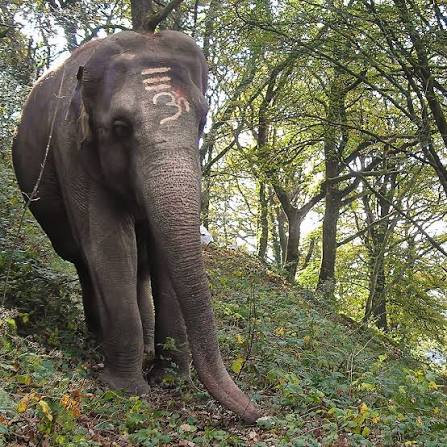
Wildlife charity calls for overhaul of 50-year-old law, although Carmarthenshire ashram says its elephants live in purpose-built facilities and are not tourist attractions
AN ASIAN elephant kept in Carmarthenshire has appeared on a new national map revealing more than 2,200 animals legally held under Britain’s dangerous wild animal licensing laws.
Data published by the Born Free Foundation lists one Asian elephant under Carmarthenshire County Council, making the county one of only four Welsh local authority areas shown as having licensed dangerous animals or applications under consideration.
The elephant is understood to be associated with Skanda Vale, the multi-faith religious community and ashram near Llanpumsaint.
However, Skanda Vale’s own website says three Asian elephants, named Valli, Lakshmi and Camela, currently live at the community.
Born Free’s published figures do not explain the difference. The charity warns that information supplied by councils may represent the maximum number permitted by a licence, the minimum number or the number present when the council responded.
Skanda Vale says the elephants live in a purpose-built barn, have access to nearby fields and are walked through the community’s woodland twice a day.
Four monks are said to work closely with the animals, accompanying them while they spend time outside and caring for their feeding, bathing and other daily needs.
The community stresses that the elephants are not a tourist attraction and visitors are not permitted to enter their barn. Photography is also prohibited at Skanda Vale.
Valli, the community’s original temple elephant, arrived in Wales from Sri Lanka in 1980 after reportedly being orphaned in the wild. Lakshmi and Camela formerly belonged to the Chipperfield Circus and later moved to France before being taken into Skanda Vale’s care.
No licensed animals recorded in Pembrokeshire
Born Free’s map records no animals currently licensed under the Dangerous Wild Animals Act in Pembrokeshire or Ceredigion.
Elsewhere in Wales, Denbighshire is listed as having 30 bison, while Monmouthshire has 12 bison and an application involving five ostriches.
An application to keep a Cuvier’s dwarf caiman is also recorded in Swansea.

Across Britain, the charity says more than 2,270 animals are licensed or subject to applications at 154 private addresses across 113 council areas.
They include 518 venomous snakes, 293 primates, 79 crocodiles, alligators and caimans, and 166 wild cats.
Animals listed across Britain include lions, tigers, cheetahs, wolves, lynx, cobras and rattlesnakes.
Born Free said the figures cover about 188 different species and subspecies, including 48 considered threatened with extinction.
The charity acknowledges that not all the animals are being kept as household pets. Some are held at sanctuaries, businesses, educational establishments or facilities involved in conservation work.
However, it believes many are being kept in domestic settings and has warned that the true number could be considerably higher because some dangerous species do not require a licence and others may be held illegally.
Law reaches its 50th anniversary
The Dangerous Wild Animals Act was introduced in 1976 following concerns about people keeping exotic and potentially dangerous animals.
Anyone seeking to keep a species covered by the legislation must obtain a licence from their local authority.
Councils must consider whether keeping the animal would pose a danger or nuisance to the public and whether its accommodation is suitable, secure and properly maintained.
Born Free claims the law has failed to keep pace with changes in the exotic animal trade, social media trends and modern understanding of animal welfare.
Chris Lewis, the charity’s captivity research and policy manager, said the legislation was originally intended to make private ownership of dangerous wild animals an exceptional occurrence.
He said: “Yet 50 years on we find ourselves in a situation where nearly ten times more venomous snakes are kept in British homes than British zoos.
“These animals are still wild, still dangerous, yet still legal to keep.
“The Government must urgently review and reform the laws governing the trade in, and keeping of, wild animals as pets.”
Born Free founder patron Dame Joanna Lumley said wild animals should not be kept as pets, regardless of how well owners believed they could care for them.
The charity is calling for ministers to review the Dangerous Wild Animals Act and the wider laws governing the sale, breeding and private ownership of exotic species.
It wants tighter controls, stronger enforcement and measures aimed at protecting animal welfare, conservation, public health and safety.
A spokesperson for the Department for Environment, Food and Rural Affairs said anyone wishing to keep an animal covered by the Act must be carefully vetted.
The spokesperson said licences imposed strict conditions governing how animals must be housed and cared for.
Carmarthenshire County Council says licensed animal establishments receive regular visits and are required to comply with their licensing conditions.



Crime3 hours ago
Women jailed after man chased through Milford home and attacked with knives
Kelly Rees receives further 27-month sentence while already serving prison term for notorious taxi robbery TWO women have been jailed...


Crime4 hours ago
Mother headbutted and clawed police officers after threatening social worker
Court shown body-worn footage of violent confrontation at Goodwick property A COURT has been shown police body-worn footage capturing the...


Crime22 hours ago
Man, 37, found dead following major police response in Pembroke Dock
Death not being treated as suspicious as police make statutory referral to IOPC following active investigation A 37-YEAR-OLD man has...

Community1 day ago
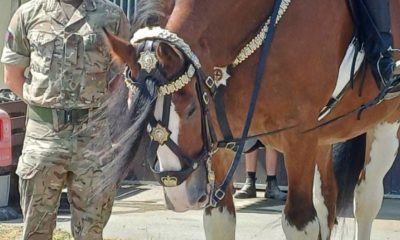
Household Cavalry drum horse returns home to Pembrokeshire for final farewell
Dyfed Willa Rose, who became Major Juno and the first mare to serve as a Household Cavalry Drum Horse, was...

News2 days ago
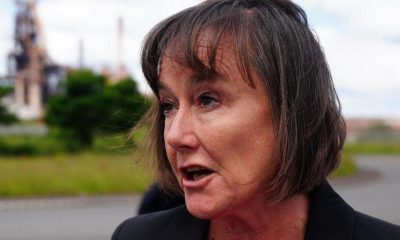
Jo Stevens out as Welsh Secretary as Burnham reshapes government
Cardiff East MP repeatedly visited Pembrokeshire to champion clean energy jobs, but her successor inherits unresolved questions over Milford Haven’s...


Crime2 days ago
Teen cleared of attempted murder but guilty of GBH after Milford teacher stabbed
Jury returns 11-1 majority verdict on charge of causing grievous bodily harm with intent, with sentencing set for September 3...

Community2 days ago
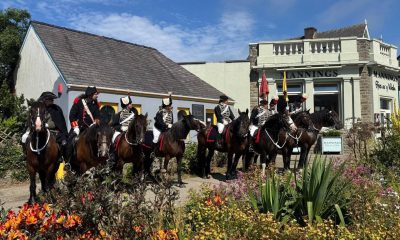
French troops march through Fishguard as Britain’s last invasion returns to life
Battle scenes, cavalry displays and a surrender procession brought one of Pembrokeshire’s most extraordinary stories back to the streets MUSKET...


News2 days ago
Andy Burnham promises new politics as he enters Downing Street
New Prime Minister admits politicians have “not been good enough” as he sets out a ten-year plan for Britain and...


Health3 days ago
Two new surgeons appointed as Hywel Dda admits orthopaedic waits remain too long
Health board says it is increasing capacity after figures revealed hip replacement patients waited an average of 64 weeks HYWEL...


Community4 days ago
84-year-old man rescued after falling overboard near Tenby
A MAYDAY call sparked a major nighttime rescue after an 84-year-old man fell from a tender and was swept towards...
-

 Crime4 hours ago
Drunken rail passenger tried to headbutt police after being refused travel
-

 featured22 hours ago
From a father-and-son project to an award-winning campervan business
-
Crime3 hours ago
Women jailed after man chased through Milford home and attacked with knives
-
Community1 day ago
Household Cavalry drum horse returns home to Pembrokeshire for final farewell
-

 Crime2 days ago
What the Milford Haven School stabbing verdict really means
-
Crime2 days ago
Teen cleared of attempted murder but guilty of GBH after Milford teacher stabbed
-
Crime4 hours ago
Mother headbutted and clawed police officers after threatening social worker
-
 Crime2 days ago
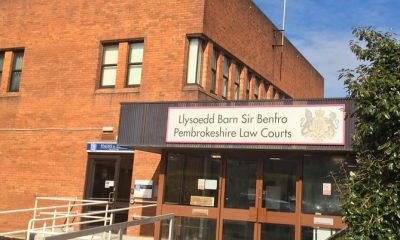
Hakin man jailed after driving while banned and over alcohol limit
malaki kerr
October 9, 2025 at 12:16 am
Clear, concise, and effective. Go live with news ary urdu — live bulletins and talk shows. crisp HD playback. interviews, prime‑time debates. stable, fast streaming.