


News
Hostile exchanges at Audit Committee


 Council’s Director of Development’s, presentation to Monday’s (Sept 22) Extraordinary Audit Committee has raised considerably more questions about grants scandal in Pembroke Dock than it answered. The thrust of Dr Jones’ lengthy address to the committee was, essentially, that where – in his words – “the irregularity” had occurred it was the fault of everyone but him or his department. Doctor Jones began by blaming the Welsh European Funding Office (WEFO) for approving a manual for the Commercial Property Grants Scheme that had “weaknesses”. His European Manager, Gwyn Evans, had written the manual, but any problems with it were clearly WEFO’s fault. And if WEFO weren’t at fault then there were all sorts of other compelling reasons (or possibly excuses) that Dr Jones could offer up. In public session, Dr Jones alleged that issues that had arisen with the Pembroke and Pembroke Dock grants schemes were all to do with the activities of one developer exploiting “loopholes” in the system. Further and in addition, Dr Jones averred that some problems had arisen because of increased workload and staffing shortages. On the one hand Dr Jones pointed out that the number of staff and projects for which he and his department had risen and on the other he pointed out that staff shortages had caused problems to arise. The failure, to replace a key manager and plan adequately for one member of staff’s maternity leave, were offered up as reasons why problems had arisen in project management.
DEPARTMENT ‘UNDERSTAFFED’ At one point, Dr Jones sought to demonstrate that whereas there were once 18 members of staff under the Head of Regeneration (a manager’s post), he now had 94 members of staff as Director of Development (a director’s post). Any sympathy most members of the Committee might have felt for the £130k+ a year Dr Jones was somewhat moderated by the fact that the overwhelming majority of those “new” posts are actually contractors engaged with the Council’s partners – such as the Futureworks initiative organised in concert with the DWP. In a thinly veiled attempt to put pressure on councillors, he three times said that it was up to councillors to decide whether they wanted the benefit of grant-aided investment in Pembrokeshire and were willing to make funds available to ensure that grants could be administered properly. Of course, Dr Jones never admitted any problems existed before – whether in staffing levels, workload or administrative burden. On the contrary, before the same Committee in January Dr Jones asserted confidently that any issues uncovered would be trivial in nature. Back in January, Dr Jones had claimed that any problems with the grants would amount to the equivalent of a few bread rolls a day lost from the canteen. As it happens, using only the figures before the Audit Committee that would mean that – at 15p per bread roll – something like 900,000 bread rolls over a calendar year, or nearly 2,500 a day h a d gone walk about on Dr Jones’ watch. But he did not apologise. He expressed “disappointment”. As a display of patronising chutzpah before the Audit Committee, it was only equalled by the continued protestations of European Manager Gwyn Evans that whatever had gone wrong it was nothing to do with him. In all of these protestations, Dr Jones and Mr Evans were dealt with in soothing and understanding tones by the newly-elected Chair of the Audit Committee, Peter Jones. Formerly of Morgan Cole Solicitors and presently legal counsel to Swansea University and Chair of Swansea Bay Futures, Mr Jones’ role appeared to be less to encourage rigorous scrutiny and investigation than to accept everything the Committee were told by officers at face value. In the absence of the Head of Legal Services, Huw Miller, and the Council’s own Monitoring Officer, Laurence Harding – it appeared that Mr Jones’ appointment was – at times – particularly fortuitous, due to his extensive legal experience heading a major law firm.
JONES THE LEGAL EAGLE Prepared to deploy his undoubtedly deep legal knowledge when it was most advantageous to the culture which allows £125,000 to be treated like loose change lost behind a sofa cushion, Mr Jones managed to appear to contradict two senior officers (Kerry MacDermott and Jon Haswell). Both of whom agreed with Cllr Jacob Williams that key documents and correspondence relating to negotiations between the Council and Mr Cathal McCosker (Dr Steven Jones’ ‘lone gunman’) could be examined by councillors on the Audit Committee as of right. That is not to say that everything was plain sailing. The Chair was visibly narked and exasperated by the efforts of Cllr Jacob Williams to extract even the merest scintilla of an apology from Dr Jones or Mr Evans. On the basis that evidence is literally ‘that which can be seen’, Mr Jones appeared impatient when Cllr Williams continued to point out that the problem was not necessarily the old procedural manual but the failure to adhere to it. Cllr Williams continued to press on in the teeth of the Chair’s rising impatience with his wish to actually hold someone to account for the repeated and manifest failings of the Council’s Development Directorate and Regeneration Unit. Cllr Williams pointed out that the Council’s own manual provided that bank statements should have been produced to show expenditure had been incurred. Offering a legal opinion based on his professional practice, Mr Jones disagreed. What Mr Jones’ keen legal mind did not pick up on, however, was that the procedural manual was a document produced by Pembrokeshire County Council for its own use. It was only approved by WEFO. The manual’s author was before the committee. Going increasing red at the back of his neck, Gwyn Evans failed to explain why he had included something in the original manual that he and his department had no intention of enforcing. He ventured to say that it would not be practical. And the Chair nodded sagely; but Mr Evans could not or did not explain that if his own procedural manual was impractical why he did not realise that and change it to reflect practicalities before any issues arose.
SAY SORRY TO STODDART Cllr Jacob Williams landed a telling blow by following up a point made earlier by Cllr Guy Woodham. Cllr Williams asked why all of the issues that Dr Jones now prayed in aid of his department had not been acknowledged before. Why, in particular, did Dr Jones persist in saying that nobody could have known what was wrong when clear evidence had been presented by Cllr Mike Stoddart at the time that something was amiss? Cllrs Woodham and Williams suggested that officers should apologise to Cllr Stoddart for the way they had previously dealt with his concerns. Councillor Williams went so far as to say that a systematic attempt had been made “to rubbish” the Hakin representative. Dr Jones pointedly declined to apologise and the Council’s European Manager, Gwyn Evans, remarkably said he stood by the content of a public FAQ document which had been shown to be factually incorrect. It was hard to determine whether either officer was intentionally or unintentionally patronising. If the word ‘sorry’ was in their minds, it was rapidly strangled before it could be uttered. Peter Jones, of course, would have been a stranger to the intricacies of the discussion before him. It did not matter how well briefed and prepared he was, the ins and outs of the grants scandal and the efforts of the Council to cover it up were not on his radar.
STODDART GETS A SAY In the teeth of Chair’s bemusement, Cllrs Woodham and Williams proposed that Cllr Stoddart address the meeting. Cllr John Allen Mirehouse gracelessly consented. Two officers, Kerry MacDermott and Jon Haswell, pointed out that as Cllr Stoddart had been invited to address the panel previously on this matter he should be asked to share his thoughts. Cllr Stoddart offered some constructive views on the way forward and agreed that the proposals in the new procedural manual and checklist proposed went some way to tackling concerns. Indeed, Cllr Stoddart seemed to have gained an ally in Jon Haswell, who agreed with him that a very basic amendment could resolve an issue which had plagued the whole grants scheme. Gwyn Evans disagreed. Peter Jones leapt in to Mr Evans’ defence. Mr Haswell was not deflected and persisted with his view. With the Chairman looking at his watch, the meeting ended shambolically and unsatisfactorily with a spat between Cllrs Mirehouse and Stoddart. Peter Jones, seemingly taking the position that the Audit Committee had no choice but to approve the documents before them, drew the meeting to a quick close at the behest of Cllrs Mirehouse and Tom Richards.



Campaigners say government decision ‘irrational and unlawful’ as ministers defend position
WOMEN born in the 1950s are threatening a Judicial Review after the UK Government refused to introduce a compensation scheme for those affected by changes to the State Pension age.
Campaign groups representing thousands of women across Wales say the decision by the Secretary of State for Work and Pensions is “legally flawed and procedurally unsafe”, arguing that ministers have relied on incomplete evidence while ignoring long-standing claims of maladministration and discrimination.

But the UK Government maintains that, while mistakes were made in communication, there is insufficient evidence that most women suffered direct financial loss as a result.
The row centres on the long-running dispute over changes to the State Pension age, which saw the retirement age for women rise from sixty to sixty-six, bringing it into line with men. Many women say they were given little or no notice, leaving them unable to plan financially.
Ombudsman findings
In 2024, the Parliamentary and Health Service Ombudsman (PHSO) concluded that the Department for Work and Pensions (DWP) was guilty of maladministration in how it communicated the changes.
The Ombudsman recommended compensation, suggesting payments could range from £1,000 to nearly £3,000 depending on impact.
However, in December, Paymaster General Pat McFadden MP said the Government would not implement a blanket compensation scheme, arguing that evidence did not show widespread financial injustice directly caused by the communication failures.
Campaigners say that stance is wrong in law.
‘Not new evidence’
Groups including 1950s Women of Wales & Beyond, 50s Women United, and Pension Partners for Justice claim ministers relied on what they described as “new evidence” to justify rejecting compensation.

They argue the material had already been available for years and therefore provides “no lawful basis” to overturn the Ombudsman’s conclusions.
In a statement, a spokesperson said: “To accept maladministration while denying financial loss is internally inconsistent.
“The Department’s failure deprived women of the opportunity to make informed decisions about retirement. Many incurred real, quantifiable losses – from depleted savings to forced early retirement and reliance on benefits.”

Campaigners also claim key testimony from former DWP ministers was omitted from the Ombudsman investigation, and that evidence of discrimination was not fully considered.
They say relying on what they call an “incomplete and selective report” leaves the Government open to legal challenge.
Political pressure in Wales
The issue has also been raised in the Senedd.
Plaid Cymru Deputy Leader Delyth Jewell MS recently pressed Welsh ministers to back affected women and push for engagement with campaigners.
Organiser Jackie Gilderdale said many Welsh women feel excluded from discussions.
“This campaign is not a brand or a limited company – it is real women whose lives were turned upside down,” she said.
“We don’t want another court battle. We want dialogue and a political solution. But if the door remains closed, Judicial Review remains an option.”
A petition calling for structured mediation between government and representative groups has already gathered more than 34,000 signatures.
Government position
The UK Government has previously said that most women were aware of the changes and that modelling showed limited evidence of widespread direct financial loss caused solely by communication failures.
Ministers have also pointed to the overall cost of compensation, which could run into billions of pounds.
Public law experts note that while maladministration findings are serious, compensation is not automatic and governments retain discretion over how – or whether – to implement financial redress.
Long-running dispute
The dispute has been ongoing for more than a decade and has become one of the most persistent pension justice campaigns in the UK.
Women’s groups argue many lost up to six years of expected pension income, with some estimating personal losses of tens of thousands of pounds.
Successive governments, however, have resisted calls for mass compensation, saying equalising the pension age was necessary for fairness and sustainability of the system.
For many campaigners, the fight is far from over.
“We are not going away,” the groups said.

Face-to-face training replaced with online resources in decision branded a ‘slap in the face’ for Wales
A LONG-RUNNING Welsh digital education programme that has trained thousands of teachers and pupils every year is facing an uncertain future after Welsh Government funding was cut and redirected to an English university.
Technocamps, a Swansea University-based project which has operated across Wales for twenty-two years, has described the decision as a major blow to digital skills development, with staff already losing jobs and schools left without in-person support.
Instead of renewing Technocamps’ funding, ministers have awarded £1.4 million under the Curriculum for Wales Grant Support Programme to the University of York to deliver mainly online learning resources, with only limited face-to-face sessions in what are described as “priority areas”.
Critics say the move risks replacing hands-on, bilingual classroom support with generic remote materials.
Each year Technocamps provides direct training to more than 900 teachers and delivers workshops to over 30,000 young people in schools across Wales, working face-to-face with pupils to improve coding, computing and digital literacy.
The programme has been widely credited with helping schools meet the growing demands of the Curriculum for Wales and tackling shortages in specialist computing skills.
‘Bitter disappointment’
Plaid Cymru MS Sioned Williams, who represents South Wales West, said she had met the Technocamps team again this month and would be writing to the Cabinet Secretary for Education seeking answers.
She said: “The necessity of good quality, face-to-face digital skills training has never been more important in this digital age.
“I’ve seen firsthand how engaging and effective a Technocamps workshop is and what makes this programme so great is that it is made in Wales, delivered bilingually through our network of universities and is able to reach every school and teacher.
“That’s why the news that Welsh Government has cut funding is so bitterly disappointing.
“At a time when Welsh universities are in financial crisis, it’s an additional slap in the face that what little funding has been allocated has gone to a university in England.”
Jobs lost across Wales
Beti Williams MBE, the programme’s founder and patron, said the funding decision had already resulted in redundancies.
She said: “The end of Technocamps funding has led to the unemployment of teacher trainers at universities across Wales, leaving nearly 1,000 school teachers who rely on our bespoke in-person training and support in limbo.
“Replacing Technocamps with predominantly standard online courses is an insult to Welsh universities. Online courses, of which there is unlimited choice, offer nothing to struggling teachers who rely on tailored, face-to-face help.”
A petition calling for funding to be restored has gathered more than 4,000 signatures and is now being considered by the Senedd Petitions Committee.
Questions over value for money
The decision has also raised questions about value for money.
According to supporters, the £1.4m grant awarded to York is almost double Technocamps’ previous annual funding, yet delivers fewer in-person services.
There are also concerns that only seven per cent of the wider Curriculum for Wales grant funding over the next three years is allocated to science and technology subjects.
Education campaigners warn that reducing practical support in computing and digital technology could widen skills gaps at a time when Wales is trying to attract high-tech industries and improve economic productivity.
Digital divide fears
Teachers have long argued that in-person training is essential, particularly for schools with limited IT expertise or rural connectivity challenges.
Technocamps staff say online-only provision risks leaving some schools behind.
Ms Williams added: “It’s so important that we keep this crucial skills and knowledge in Wales. The thought that we could lose this valuable resource makes no sense at a time when the need for digital competency has never been greater.”
Welsh Government has been asked to explain why the funding was awarded outside Wales and whether the impact on Welsh university jobs and school support was assessed before the decision was made.

ART lovers in Pembrokeshire will have the chance to experience the lives and rivalries of two of Britain’s greatest painters when a new documentary, EOS: Turner & Constable, arrives at the Torch Theatre this March.
Celebrating the 250th anniversary of their births, the film explores the intertwined stories and enduring legacies of J.M.W. Turner and John Constable alongside Tate Britain’s major new exhibition. Exhibition on Screen has been granted exclusive behind-the-scenes access, bringing their extraordinary art and personal histories vividly to the cinema screen.
Born just a year apart, Turner and Constable helped redefine landscape painting in Britain – and were fierce competitors. Both captured a nation in transition, yet their styles could not have been more different. Turner’s dramatic skies, blazing sunsets and atmospheric scenes from his travels contrasted sharply with Constable’s gentle, nostalgic portrayals of the English countryside and familiar rural life.
Their opposing visions divided critics and audiences alike, famously described at the time as a clash of “fire and water”.
The documentary offers rare, intimate access to sketchbooks, letters and personal artefacts, alongside insights from leading curators and art historians. It also ties in with Tate Britain’s landmark exhibition, running in London from November 2025 to April 2026, which reunites the two masters’ works side-by-side.

This cinematic event gives audiences the chance to see their masterpieces in stunning detail and discover unexpected sides to two artists whose rivalry shaped British art history.
Turner and Constable will be screened at the Torch Theatre on Sunday, March 15 at 4:30pm.
Tickets are £13. For bookings, visit www.torchtheatre.co.uk or call the Box Office on 01646 695267.


Crime20 hours ago
Manhunt intensifies after woman seriously injured in Carmarthen park stabbing
Police say suspect known to victim as attempted murder investigation continues A MAJOR police manhunt is under way after a...


Health2 days ago
Consultation reveals lack of public trust in health board
EARLIER this week, Hywel Dda UHB published the results of a consultation into the future configuration of its clinical services....


Community2 days ago
Specialist team searches River Teifi in ongoing hunt for missing man
A SPECIALIST search team has carried out a renewed and highly technical search of the River Teifi in Cardigan as...


News3 days ago
Wales’ first minister keeps distance from Starmer before May vote
Senedd race not Westminster THE FIRST MINISTER has moved to draw a clear dividing line between the Welsh Labour campaign...

News3 days ago
Kurtz raises Gumfreston flooding in the Senedd as petition deadline nears
LOCAL Senedd Member Samuel Kurtz has raised the long-running flooding problems affecting the B4318 at Gumfreston in the Senedd, as...
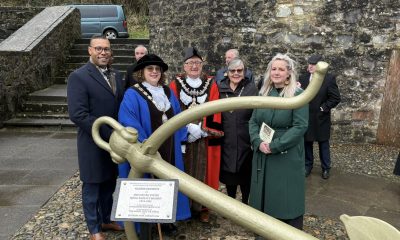

Community3 days ago
Anchor re-dedicated to mark 30 years of US–Haverfordwest ties
Service honours shared history, service and friendship on the Quayside A SYMBOL of Haverfordwest’s wartime and Cold War connections with...


Business4 days ago
Senedd urged to act as Welsh pubs fall further behind England on business rates
Industry leaders warn of closures and job losses as pressure mounts on ministers to pass on funding PUBS across Wales...


Crime4 days ago
Haverfordwest man jailed for online death threat
A Haverfordwest man has been sentenced to a year in prison after sending a threatening message online. Michael Carruthers, 34,...


Community4 days ago
Storm Chandra: Morning impacts across Pembrokeshire
HEAVY overnight rain and strong winds brought by Storm Chandra have caused disruption across Pembrokeshire, with fallen trees and localised...


Business5 days ago
Business voices heard as Kurtz and Davies urge action on business rates
LOCAL businesses from across West Wales have voiced serious concerns about the impact of business rates at a dedicated roundtable...
-
Health7 days ago
Health Board to decide on future model for nine clinical services
-
Health2 days ago
Consultation reveals lack of public trust in health board
-

 News3 days ago
Caldey still unsafe, survivors warn — despite Abbey’s reform claims
-

 Community3 days ago
Pembrokeshire students speak at national Holocaust Memorial Day event
-

 Climate7 days ago
Petition opposing climate emergency reaffirmation and ‘tax hikes’ to be heard
-
 Crime7 days ago
Pay boost for over 1,000 Pembrokeshire school support staff pledged by Labour
-

 Business7 days ago
Pembroke Dock battery box energy scheme is approved
-

 News5 days ago
Wales warned against single police force as Lib Dems cite Scotland ‘lesson’
tomos
November 14, 2014 at 4:15 pm
Why do these guys keep digging when they’re in a hole?
BPJ is no longer there to protect them If they are imbeciles or incompetent, these cocky public servants should realise they now have to report correctly and properly TO US, perhaps they should apologise and hope the police aren’t investigating – are they still ?