


Cymraeg
Welsh speakers drop to shocking lowest percentage in eight years

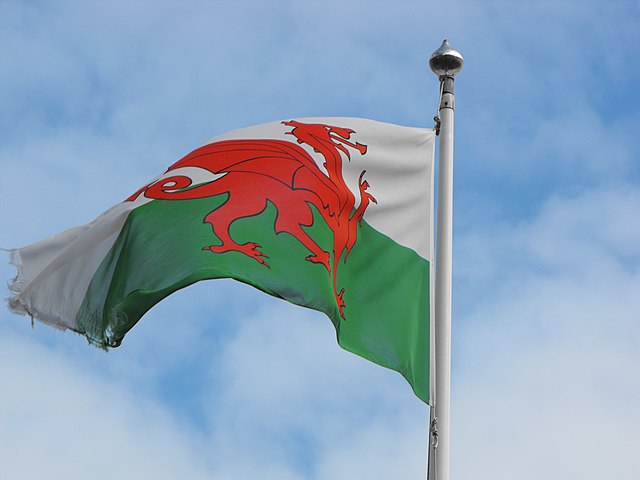
THE PERCENTAGE of Welsh speakers has fallen to its lowest level in over eight years, with just 27.7% of people in Wales able to speak the language, according to government statistics.
Data from the annual population survey, which covers the year ending 30 September 2024, estimates there are around 851,700 Welsh speakers in Wales. This marks a 1.6% decline compared to the previous year.
Despite the drop, the Welsh government remains resolute in its commitment to increasing the number of Welsh speakers. A spokesperson said: “We are absolutely committed to our goal of having one million Welsh speakers and doubling the daily use of Welsh.”
The ambitious target of one million Welsh speakers by 2050 is measured using census data, rather than the annual population survey.
Census data paints a stark picture
The 2021 census revealed a further decline in Welsh speakers, with only 17.8% of residents—approximately 538,000 people aged three and older—reporting they could speak the language.

Welsh speakers by the numbers
The annual population survey provides further insights:
- Children lead the way: 48.6% of children and young people aged 3 to 15 reported they could speak Welsh, equating to 237,600 individuals. However, this figure has been gradually declining since 2019.
- Regional highs and lows:
- Gwynedd boasts the highest number of Welsh speakers (93,600), followed by Carmarthenshire (93,300) and Cardiff (83,300).
- Blaenau Gwent and Merthyr Tydfil have the fewest Welsh speakers, with 9,500 and 10,600, respectively.
- In percentage terms, Gwynedd (77.9%) and the Isle of Anglesey (63.6%) lead, while Rhondda Cynon Taf (13.9%) and Blaenau Gwent (14%) rank lowest.
How often is Welsh spoken?
Among those who can speak Welsh:
- 13.9% (428,800 people) speak it daily.
- 5.6% (171,300) use it weekly.
- 6.7% (204,700) speak it less often.
- 1.5% (46,500) never speak Welsh despite being able to.
The remaining 72.3% of people in Wales do not speak Welsh at all.
Understanding Welsh
Beyond speaking:
- 32.2% (989,300 people) reported they could understand spoken Welsh.
- 24.4% (751,600) can read Welsh.
- 22.1% (680,100) can write in the language.
Survey sample size questioned
The annual population survey, conducted by the Office for National Statistics (ONS), has faced criticism over falling sample sizes in recent years. However, the ONS confirmed to the BBC that 14,881 responses were used for the Welsh language questions in the latest survey.
The figures underline the challenges facing efforts to revitalize the Welsh language, even as the government strives to meet its ambitious 2050 targets.



A CALL for permission for works clearing part of the 2026 Eisteddfod site ahead of this year’s festival in Pembrokeshire has been given the go-ahead county planners.
In an application to Pembrokeshire County Council, Cardiff-based Angharad Davies sought permission for the removal of multiple small sections of hedge on a temporary basis for the forthcoming Eisteddfod at Glanrhyd Road, Llantood/Llantwd.
A supporting statement said: “Preparation works have been undertaken to reduce hedge growth in several locations where openings are required for festival access, with all arisings shredded and retained within the hedgerow to support natural regeneration.
“Any openings created will be carefully excavated, with the soil set aside and preserved for reinstatement upon completion, ensuring that all materials are returned as found. Where herringbone stonework is uncovered, we will reinstate it to match the original as closely as possible, typically engaging a specialist local stone mason experienced in traditional methods.
“Following the event, reinstatement works will be completed prior to leaving site, and we will return in November to plant a mix of seven hedgerow species and we will consult with yourselves to ensure the selected species are appropriate and in line with your recommendations, maintaining the character and biodiversity of the site.
“Where possible, we have incorporated original gates into a number of the proposed openings to retain the character and integrity of the site, ensuring consistency with existing features.
“In selecting locations for access points, we have prioritised sections of hedgerow with minimal growth to reduce the extent of intervention required and to minimise impact of the surrounding vegetation. This approach supports efficient installation while maintaining the natural appearance and structure of the hedgerows.”
The application was unconditionally approved by county planners.
The 2026 festival, running from August 1-8 at Llantwd holds particular historical significance, marking the 850th anniversary of the first recorded Eisteddfod, held in 1176 at Castell Aberteifi.
With this year’s Maes located close to the original site, the event is expected to be a landmark occasion for the region and for Wales as a whole.
The National Eisteddfod is the largest cultural festival in Europe and one of the most prominent events in the Welsh cultural calendar, attracting approximately 175,000 visitors annually.
The festival celebrates Welsh language, literature, music, and the arts, with a diverse programme of competitions, performances, exhibitions, and community activities.

The Eisteddfod proclamation took place in Narberth last May, with hundreds attending.
At the time, Narberth County Councillor Mark Tierney posted: “One of the biggest parades through Narberth in a long time and we provided the warmest of welcomes to visitors from near and far for the Eisteddfod proclamation procession.”
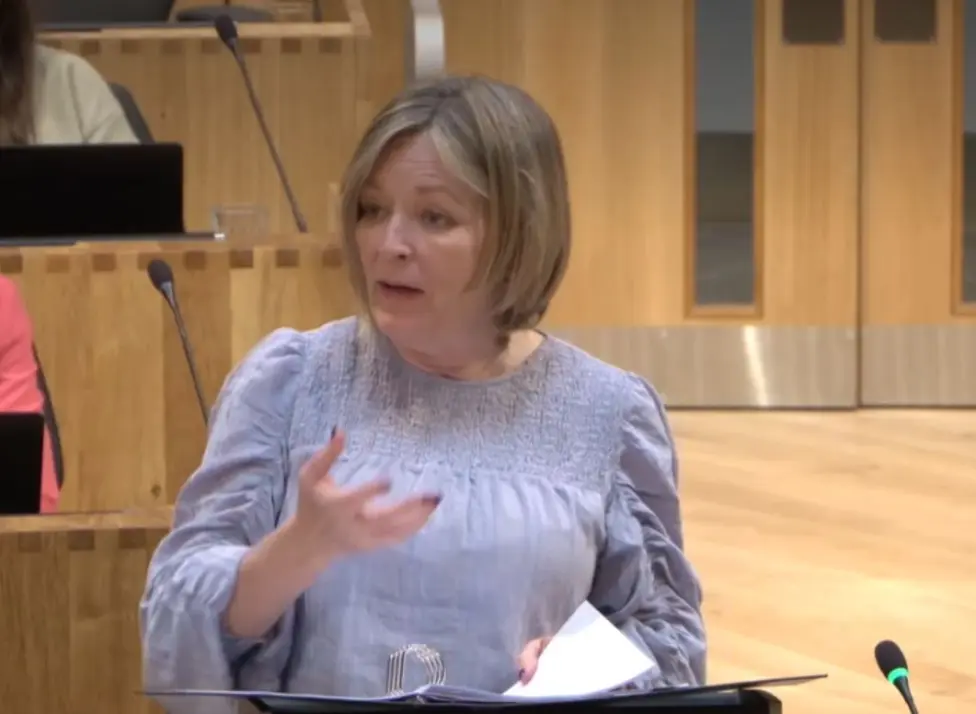
THE WELSH language is “one of our biggest success stories as a small nation on the world stage”, according to the minister responsible for the language.
Education and Welsh language minister Anna Brychan told the Senedd on 7 July that “language does not live solely through policy, but through people and through use.”
Sharing how the language has influenced her life, Ms Brychan said: “My personal story is a bilingual one. My mother learned Welsh as an adult. Today, Welsh and English intertwine in my family at home in Grangetown, and several other languages can be heard around us, and that’s a good thing.”
Concluding her speech, Ms Brychan said: “This is our opportunity to ensure that our two languages drive our future – in the community, digitally, in education and in the economy, and with the Welsh language contributing to making a welcoming, confident bilingual and multilingual country for us all.”
Reform’s deputy leader in Wales, Helen Jenner, described her parents’ decision to send her to a Welsh-medium school as one of “the most precious gifts” they could have given her.
Ms Jenner shared the story of her grandfather, Silgwyn Weston, who didn’t speak any English until he was around eight years old.
She told the Siambr how having received advice from his sister, who attended university in London, her grandfather decided the best way to provide opportunities to his children was for them to speak English at home, meaning her mother did not have the chance to speak Welsh.
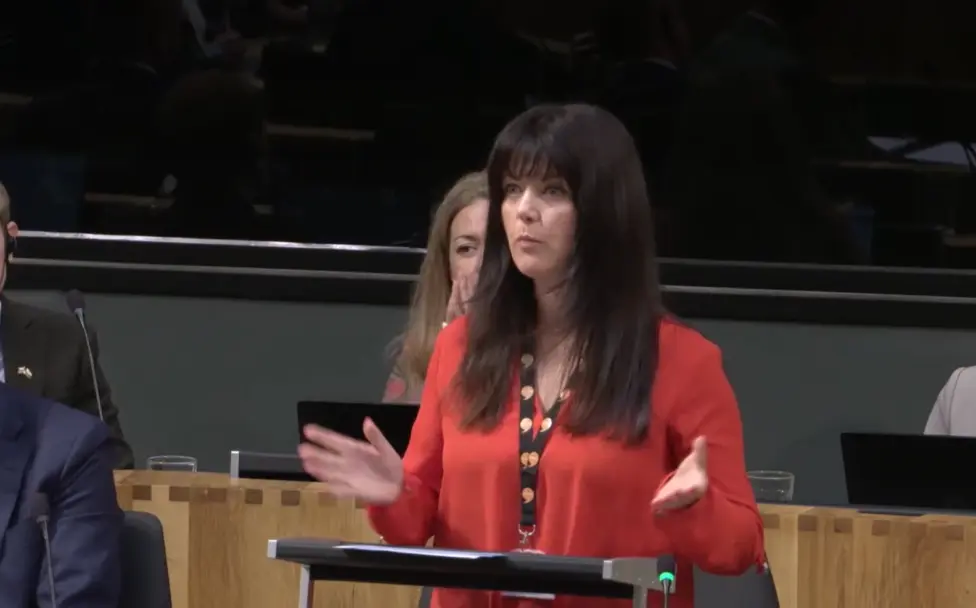
She said: “There was something very special between myself and my grandfather. We were the only two members of the family who could hold a natural conversation in Welsh.
“Silgwyn Weston was a very proud Welshman and in his final years, there was one constant – his hearing was somehow always better if the conversation was about rugby or if someone spoke Welsh to him.”
Reform’s deputy leader agreed with Ms Brychan that language sits at “the heart” of Welsh culture, but criticised the government’s plan to use legislation and targets to secure the language’s future.
She said: “We can’t force people to love a language. We can’t legislate for enthusiasm. We can’t create Welsh-speaking communities through targets alone. The Welsh language flourishes when people choose to use it at home, in the workplace, in the pub, on the rugby pitch and on the street.”
Ms Jenner also welcomed the minister’s commitment to strengthening the Welsh language in digital and AI, adding that if Welsh is not available in these technologies there is a risk of it being “left behind”.
She asked how the government will measure an increase in the daily use of the language and what practical steps will be taken to help learners use Welsh once they have left school.
Responding, Ms Brychan said: “People shouldn’t have to look for opportunities to use the Welsh language.”
She noted importance of including Welsh outside of education, in areas such as “technology, workplaces, sport, culture, planning, research, and leadership in our communities”.

Also sharing his experiences with the Welsh Language, Labour’s Huw Thomas told the Siambr that he himself “couldn’t speak a word of English” until he was around 7.
Discussing the Welsh Government’s target of a million Welsh speakers by 2050, former Cardiff Council leader Mr Thomas called for further details on how the Welsh language will be pushed through childcare and the education system.
He asked Ms Brychan how many Welsh-medium childcare settings will need to be developed to reach the target of free childcare from nine-months-old and how the Welsh Government plans to ensure Welsh-speaking staff will be available to meet demand.
Ms Brychan acknowledged the challenges in terms of developing the necessary workforce, but said there’s “a plan in place” to address this.
The Labour spokesperson for the Welsh language then noted the importance of Welsh in technology and the workforce.
He urged the minister to work with trade unions to promote the Twf Charter, which was developed to promote Welsh in the workplace.
Mr Thomas also questioned what measures the government will be taking to introduce more Welsh-medium apprenticeships.
Ms Brychan revealed she has numerous upcoming meetings on technology, and said the Welsh language is at the forefront of her discussions with such companies.
She also said she’s “always” willing to speak to unions to get their views and expertise.

Conservative Paul Davies voiced his and his party’s support for the Welsh Government’s target of one million Welsh speakers by 2050, but questioned Ms Brychan on Welsh-medium education and socialising through the Welsh language.
Mr Davies highlighted that currently only 21% of children are in Welsh-medium schools, according to the latest schools survey.
He suggested that work could be done in terms of learner travel to help reduce barriers to Welsh language education.
The Conservative spokesperson called on Ms Brychan to reveal whether she will review the Learner Travel (Wales) Measure 2008 to see if more “can be done” to allow children access to Welsh-medium education. However, Ms Brychan did not mention learner travel in her response.
Mr Davies also spoke of the importance of socialising in Welsh in cultural settings, referring to events such as Tafwyl, which took place in Cardiff last month.
He said: “These events and many other community events are held by organisations like the mentrau iaith and others, of course, that do so much in our communities with little resource.”
Mr Davies called on the Welsh Government to consider how it can support community organisations “more effectively” in the future.
Ms Brychan replied: “In terms of socialising through the medium of Welsh, that takes me back to the point that I was making that we need to create the environment where people don’t have to look for opportunities to use the Welsh language.
“As you mentioned, the opportunities provided through the mentrau iaith are key to ensure that those opportunities are available.”
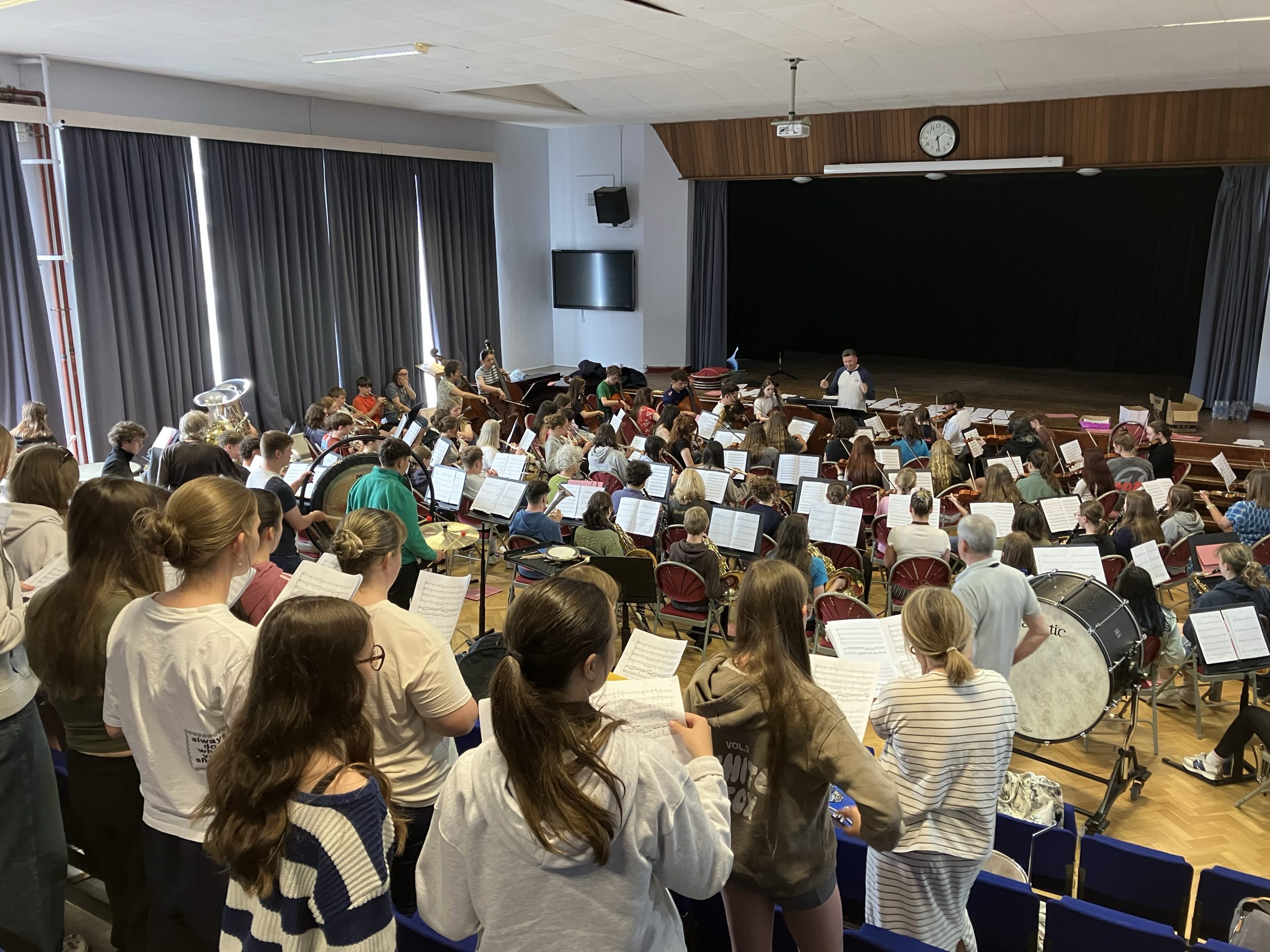
NEW Paul Mealor work, with words by Menna Elfyn, will be performed by 150 young people from Carmarthenshire, Ceredigion and Pembrokeshire
A new composition by internationally acclaimed Welsh composer Paul Mealor will bring this year’s National Eisteddfod to a spectacular close, as 150 young musicians from across west Wales take to the Pafiliwn stage.
Côr a Cherddorfa’r Tair Sir, the Three Counties Choir and Orchestra, will perform Angerdd a gerdd, a new work specially commissioned from Professor Mealor, with words by celebrated poet Menna Elfyn.
The concert will close the Pafiliwn programme on the final Saturday evening of the festival, bringing together young performers from Carmarthenshire, Ceredigion and Pembrokeshire for what organisers say will be one of the highlights of the week.
Côr y Tair Sir was originally formed following the creation of Dyfed in the 1974 local government reorganisation, becoming well known across the region and beyond. It has now been revived especially for this year’s National Eisteddfod, with support from the National Music Service of Wales and sponsorship from the Gwendoline and Margaret Davies Charity, Gregynog.
Rehearsals began in the spring, with pupils meeting regularly to prepare for the performance.
Professor Mealor said he had been delighted by the response from the young musicians.
“One hundred and fifty young people came together to rehearse my new work, to Menna Elfyn’s powerful words, and it sounded wonderful from the very first rehearsal,” he said.
“It’s a challenging piece for young voices, but I’ve been hugely impressed by their commitment, and I’m certain it will be a thrilling experience for the audience on the night.”
Mealor, who was born in St Asaph and raised in Connah’s Quay, has long-standing links with Wales’ musical tradition. He studied composition with Professor William Mathias at the University of York and has credited Mathias as the inspiration behind his musical career, particularly his passion for choral music.
The new work will also showcase the words of Menna Elfyn, one of Wales’ leading poets. Since the publication of her first poetry collection, Mwyara, 50 years ago, she has produced numerous volumes of poetry, children’s books and anthologies, while also writing for stage, radio and television. Her work has received widespread critical acclaim and many awards.
As well as marking the end of the festival week, the concert will celebrate the National Eisteddfod’s rich musical heritage and give a new generation of performers the chance to present a major choral work on one of Wales’ most prestigious stages.

Classical music will feature prominently across the Maes this year, with events taking place at Y Stiwdio and Encore.
Among the highlights is a performance of Atgof o’r Sêr, Memory of the Stars, composed by Robat Arwyn with words written especially for Bryn Terfel. First performed at the 2001 Denbigh National Eisteddfod, this year marks the 25th anniversary of its premiere.
The eight-song cycle will be performed by recent winners of the Osborne Roberts Memorial Prize, including Steffan Lloyd Owen, Meinir Wyn Roberts, John Ieuan Jones, Llinos Haf Jones, Dafydd Jones, Siriol Elin, Joshua Mills and Lisa Dafydd.
Another highlight will be a rare opportunity to hear two songs by composer Meirion Williams, marking the 50th anniversary of his death.
On behalf of the Eisteddfod, musician Sioned Webb and Steffan Prys explored the archive of the late soprano Ceinwen Rowlands, with the assistance of Maredudd ap Huw at the National Library of Wales.
Sioned spent time in London during the 1980s researching and completing an MA dissertation on the life and work of Meirion Williams, but she was unaware of the Ceinwen Rowlands collection at the time.
This year she discovered two previously unperformed pieces in strict Welsh metres, cywyddau by Siôn Cent and Huw Morys, also known as Eos Ceiriog. She edited them for performance with the assistance of Eurig Salisbury.
It will be the first time the two songs have been heard in more than 80 years. Nerys Williams, the composer’s daughter, has been invited to attend the Eisteddfod and present the scores to Tŷ Cerdd.
Betsan Moses, Chief Executive of the National Eisteddfod, said: “There’s a strong programme of classical music across the Maes this year. We’re delighted to welcome so many former competition winners back to perform, celebrating the connection between competing at the Eisteddfod and their career in music.
“We’re also using Rhosygilwen, near the Maes, as the venue for our music prelims during the week, and everyone is welcome to come along and enjoy the performances.
“The Pafiliwn event on the final Saturday evening promises to be one of the highlights of the festival. It is wonderful to give classical music such a prominent place at its heart, while offering talented young local musicians the chance to be part of a unique experience, working alongside one of Wales’ best-known composers and bringing the words of one of our leading poets to life through music.
“It will provide a memorable finale to a week of music and creativity.”
Eisteddfod Genedlaethol y Garreg Las will be held in Llantwd, north Pembrokeshire, from August 1 to 8. Further information and tickets are available at eisteddfod.cymru.



Crime3 hours ago
Man, 37, found dead following major police response in Pembroke Dock
Death not being treated as suspicious as police make statutory referral to IOPC following active investigation A 37-YEAR-OLD man has...

Community7 hours ago
Household Cavalry drum horse returns home to Pembrokeshire for final farewell
Dyfed Willa Rose, who became Major Juno and the first mare to serve as a Household Cavalry Drum Horse, was...

News24 hours ago
Jo Stevens out as Welsh Secretary as Burnham reshapes government
Cardiff East MP repeatedly visited Pembrokeshire to champion clean energy jobs, but her successor inherits unresolved questions over Milford Haven’s...


Crime1 day ago
Teen cleared of attempted murder but guilty of GBH after Milford teacher stabbed
Jury returns 11-1 majority verdict on charge of causing grievous bodily harm with intent, with sentencing set for September 3...

Community1 day ago
French troops march through Fishguard as Britain’s last invasion returns to life
Battle scenes, cavalry displays and a surrender procession brought one of Pembrokeshire’s most extraordinary stories back to the streets MUSKET...


News1 day ago
Andy Burnham promises new politics as he enters Downing Street
New Prime Minister admits politicians have “not been good enough” as he sets out a ten-year plan for Britain and...


Health2 days ago
Two new surgeons appointed as Hywel Dda admits orthopaedic waits remain too long
Health board says it is increasing capacity after figures revealed hip replacement patients waited an average of 64 weeks HYWEL...

Community3 days ago
84-year-old man rescued after falling overboard near Tenby
A MAYDAY call sparked a major nighttime rescue after an 84-year-old man fell from a tender and was swept towards...


Crime4 days ago
Jury hears final arguments in Milford Haven teacher stabbing trial
Defence says there was no motive or intention to kill as judge reviews competing accounts of classroom knife incident SPECIAL...


News4 days ago
Andy Burnham becomes Labour leader and prepares to enter No 10
Former Greater Manchester mayor promises an ‘unashamedly Labour’ government after completing extraordinary return to Westminster ANDY BURNHAM has been formally...
-

 Health1 day ago
Welsh Ambulance Service invites public to AGM and Board meeting
-

 featured3 hours ago
From a father-and-son project to an award-winning campervan business
-
Crime1 day ago
Teen cleared of attempted murder but guilty of GBH after Milford teacher stabbed
-

 Crime1 day ago
What the Milford Haven School stabbing verdict really means
-
 Business1 day ago
Port appoints two new directors as energy and regeneration projects advance
-
Community7 hours ago
Household Cavalry drum horse returns home to Pembrokeshire for final farewell
-

 Entertainment2 days ago
Dinosaur adventure set to roar into the Torch Theatre
-
 Farming2 days ago
Welsh farmers promised £1bn funding package under three-year deal